

Skylight Leak in Pascagoula, MS — What Homeowners Need to Know
Skylight leaks freak homeowners out more than almost anything else — and for good reason. When a skylight starts
leaking, water absolutely can show up right around the skylight, dripping from the frame or staining the drywall.
But what really sends people into panic mode is when the leak shows up three feet away, down a wall, in a ceiling
corner, or nowhere near the skylight at all. That happens because water travels along the roof deck, rafters, or
flashing channels before gravity finally lets it drop — so the leak location almost never matches the entry point. If you’re comparing symptoms,
start with Common Pascagoula Roof Leaks,
Pascagoula Kitchen Stains, and
our how-to guides.
Here’s What Homeowners Usually Notice First
- A brown stain growing near (but not directly under) the skylight
- Water dripping only during certain wind directions
- Wet drywall seams or bubbling paint around the skylight shaft
- A stain that appears hours after the rain stops
- Frosting/condensation on the skylight glass that shouldn’t be there
What Actually Causes Skylight Leaks in Pascagoula
1. Failed flashing system
Skylights rely on step flashing + head flashing + apron flashing + side channels. If even one of those pieces lifts,
separates, or loses sealant during expansion/contraction, rain rides the metal and drops straight into the drywall shaft.
2. Seal failure around the skylight frame
Heat + humidity cycles in Pascagoula cause the perimeter seals to shrink and crack. Once that happens, wind-driven rain
pushes under the frame and follows gravity until it finds a weak point inside the house.
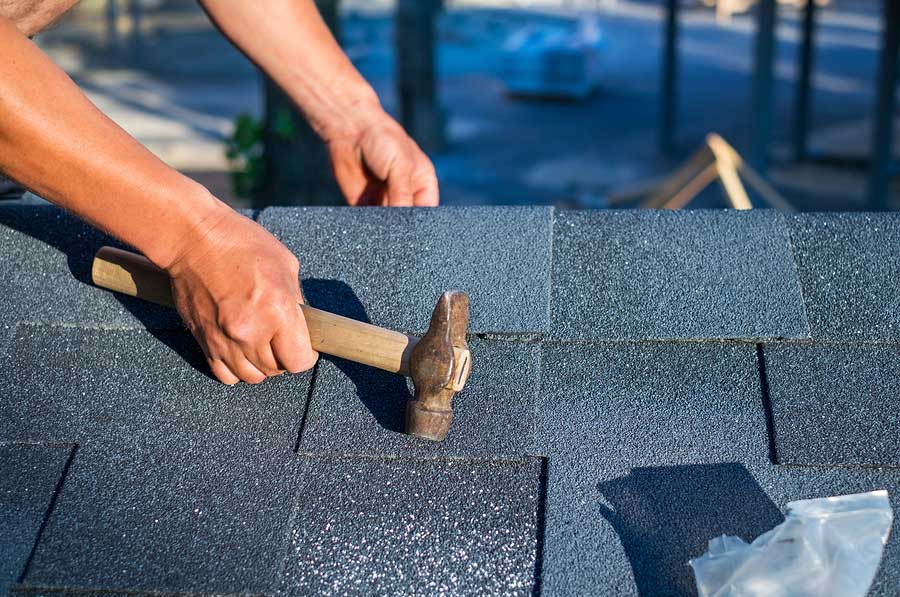
3. Roofing nails backing out around the skylight curb
Tiny nail pops around the skylight curb allow water to enter behind the flashing system. The leak then shows up far away
from the real entry point — super common in our Gulf climate. That same leak-travel logic shows up on
Missing Shingles Pascagoula
and other roof repair pages too.
4. Condensation acting like a leak
This one gets homeowners every winter: warm interior air hits the cold skylight surface, drips down the shaft, and looks
exactly like a roof leak. We see this constantly when temps swing from the 20s in the morning to the 60s by afternoon.
5. Wrong flashing for Gulf weather
Improper or incomplete skylight flashing is a huge problem. A properly installed skylight can be flashed two main ways:
- Using the manufacturer’s full step-flashing/head/apron kit on a new skylight, or
- Hand-fabricated step flashing with a head piece + apron combined with ice-and-water shield wrapped tight around the
skylight curb — perfectly acceptable when re-flashing an existing unit.
Down here, the problem is roofers skipping both of those correct methods. Instead of individual step pieces, they often
install long continuous metal panels along the sides. Those look “clean,” but they cannot shed water correctly. Water rides
the metal until it finds an opening, slides underneath the panel, and then shows up either around the skylight or several
feet away depending on the pitch and rafter direction. That’s why pages like
Storm Damage Guide and
Roof Repair Guide
matter for homeowners trying to understand the difference between entry point and stain location.
From the Roof Nerds at SJ&H Roofing — What’s Actually Happening
Skylight leaks behave like pressure-driven failures, not simple “holes.” During Pascagoula cold fronts, wind hits the
roof plane, creates negative pressure, and pulls water upward under the flashing. Once that micro-gap opens, capillary
action takes over — water moves sideways, uphill, and along the skylight shaft framing.
That’s why skylight leaks almost never appear directly under the skylight. The roof system is routing water along whatever
path physics allows, then gravity finally dumps it inside your drywall. Homeowners often think the skylight is fine, but
the failure is two feet above it in the flashing system. For more of that Gulf-coast mechanics logic, see
Roof Nerd Systems
and the Mississippi Gulf Coast Roof Intelligence Index.
If You’re Seeing Skylight Leaks or Stains
If you’re dealing with a skylight leak or seeing stains forming around the shaft, let’s figure out what’s actually going
on. We’ll come out, show you exactly where the issue is (with photos), and tell you whether it’s a repair or a replacement
situation.
No charge for the inspection.
Pascagoula Hub
Pascagoula Roof Repair
Pascagoula Roof Replacement
Contact SJ&H Roofing
Learn more:
Repair vs Replace
Roof Replacement Guide
Roof Financing
FAQs
Call/Text:
228-546-2495
Pascagoula •
Moss Point •
Gautier •
Escatawpa •
Hurley
Have questions or want to learn more? Meet our team or get in touch with us today.