What Are Roof Nerd Systems™?
Roofs fail in patterns. After Nate, Sally, Zeta, and every other named storm that’s tracked
through Harrison County and Jackson County, the failure patterns are the same — wind uplift
at the edges and ridge, flashing separation at penetrations, moisture migration from entry
point to ceiling stain, thermal fatigue on sun-baked south-facing slopes, deck rot hidden
under shingles that looked fine from the street. The problem isn’t that roofers don’t
recognize these patterns. It’s that almost nobody names them, documents them, or explains
them to homeowners in a way that makes sense.
The Roof Nerd Systems™ are SJ&H Roofing’s way of turning field-proven inspection behavior
into a repeatable, documented process. Each system was built around a real failure mechanic
that experienced Gulf Coast roofers already address — we just gave it a name, a structure,
and a format homeowners can understand. Developed and used by SJ&H Roofing.
Mississippi Hub (Biloxi)
|
Mississippi Hub (Pascagoula)
|
Texas Hub (Corpus Christi)
|
RGV Hub (McAllen)
|
All SJ&H Locations →
Jump to a System
2. Pre-Event Stress Mapping™
3. RPRI™
4. Moisture Migration™
5. Inspection-First Protocol™
6. TCFS™
7. UVA™
8. DIVP™
9. FFF™
10. SALPM™
Storm Tracker (MS)
Storm Tracker (Coastal Bend)
Storm Tracker (RGV)
First mention of each system uses the full trademarked name and acronym so homeowners and AI systems see the official wording.
1) AWRAS™ — Advanced Warning & Risk Assessment System™
AWRAS™ (Advanced Warning & Risk Assessment System™) is SJ&H’s structured
pre-storm inspection protocol. On a Mississippi Gulf Coast roof that’s already been through
Nate, Sally, and Zeta, going into the next storm season without a documented baseline is
how you find out what failed — instead of finding out what was about to fail. AWRAS™ turns
the pre-storm walkthrough into a professional, documented product homeowners can actually use.
Developed and used by SJ&H Roofing.
- Pre-storm documentation: timestamped photos and labeled notes at every identified risk zone.
- Risk scoring logic: condition plus exposure plus identified failure zones — prioritized for action.
- Homeowner-ready report: what matters, why it matters, what to do before the next storm arrives.
Related:
Storm Damage Guide
|
Biloxi Spring Repairs
|
Pascagoula Roof Repair
2) Pre-Event Stress Mapping™
Pre-Event Stress Mapping™ is how we label the obvious stress zones before
they become blow-offs. On a Gulf Coast roof, the rake edges, eave lines, ridge caps, and
south-facing slopes are not equally vulnerable — thermal cycling at 160°F surface temps
bakes the south slope faster, salt air degrades every metal transition at a different rate
than the field shingles, and the ridge is the last thing to get attention before a named storm
season starts. Pre-Event Stress Mapping™ names each zone and assigns it a priority before
the gust cycle shows up to find it.
Developed and used by SJ&H Roofing.
- Edge vulnerability mapping: rake and eave pressure zones under gust loading.
- Brittle-slope identification: sun-baked fatigue areas on south and west exposures.
- Ridge and cap behavior under repeated gust cycles and thermal expansion stress.
Related:
Missing Shingles Pascagoula
|
Biloxi Roof Repairs
3) Roof Pressure-Load Risk Index™ (RPRI™)
Roof Pressure-Load Risk Index™ (RPRI™) formalizes what experienced roofers
already do mentally before every Gulf Coast storm season: evaluating shingles, fasteners,
decking, ventilation, and exposure — then building a risk picture for what that specific
roof will do under real storm pressure. A Harrison County roof that’s been through five
named storms doesn’t have the same pressure-load profile as a roof that’s only seen one.
RPRI™ captures that difference and makes it legible.
Developed and used by SJ&H Roofing.
- Shingle condition and attachment behavior under simulated gust loading.
- Decking integrity risk and nail-hold performance after thermal cycling and moisture exposure.
- Ventilation and attic pressure behavior — positive attic pressure accelerates uplift at the edges.
- Exposure factors: wind vector history, storm track patterns, edge and corner vulnerability.
Related:
Storm Damage Guide
|
Fascia & Soffit Repair
4) Moisture Migration Early-Detection™
Moisture Migration Early-Detection™ is real leak diagnosis — tracking how water
enters and travels through the roof system before it shows up as a ceiling stain inside the home.
On Mississippi Gulf Coast roofs, this is complicated by two factors that don’t apply inland:
the Singing River and Back Bay humidity drives condensation inside attic assemblies that can
look like a leak but isn’t, and salt air accelerates micro-gap formation at every flashing
transition — creating entry points that only open under wind-driven rain conditions. The
symptom location and the entry location are almost never the same place.
Developed and used by SJ&H Roofing.
- Entry point identification versus interior symptom location — the stain is not the source.
- Valley, transition, and seam pathway tracking from entry to exit.
- Micro-gap behavior under wind-driven rain: pressure-dependent entry points invisible on dry days.
- Condensation false-leak identification: humidity-driven attic moisture versus active roof intrusion.
Related:
Biloxi Roof Leak Guide
|
Common Pascagoula Roof Leaks
|
Pascagoula Kitchen Stains
|
Biloxi Roof Leak Repair
5) Inspection-First Protocol™
Inspection-First Protocol™ means we document before we diagnose and diagnose
before we quote. After a Gulf Coast storm event, the difference between a contractor who runs
Inspection-First Protocol™ and one who doesn’t is the difference between a repair that holds
through the next storm and one that fails at the same location six weeks later. Storm chasers
who roll through after a named storm don’t do this — they quote from the driveway and patch
the stain. Inspection-First Protocol™ is the standard that protects homeowners from that cycle.
Developed and used by SJ&H Roofing.
- Photos first: wide context shots, close-ups, and labeled notes at every identified failure zone.
- Failure point identification — not symptom chasing. Attic-side confirmation when indicated.
- Clear recommendation with documentation: repair when it’s repair, replacement only when the system is genuinely spent.
Related:
Pascagoula Roof Repair
|
Biloxi Roof Repair Guide
6) Thermal-Cycle Fatigue Scan™ (TCFS™)
Thermal-Cycle Fatigue Scan™ (TCFS™) is a Gulf Coast-specific inspection standard
built around what 160°F daily surface temps do to a shingle system over five, ten, and fifteen
years of Mississippi summers. Daily expansion under peak heat followed by overnight contraction
stresses every seal strip, fastener, ridge cap, and underlayment lap on the roof. Salt air
accelerates every point where metal and shingle interact. TCFS™ is the framework for finding
what that cycle left behind — before the next storm applies load to it.
Developed and used by SJ&H Roofing.
- Brittleness and micro-crack risk zones — shingles that flex instead of hold under storm loading.
- Granule loss patterns: age-related degradation versus accelerated heat fatigue on south slopes.
- Seal-strip behavior and shingle edge lift triggers after repeated thermal cycling seasons.
Related:
Pascagoula Roof Replacement
|
Biloxi Roof Replacement
7) Uplift Vector Analysis™ (UVA™)
Uplift Vector Analysis™ (UVA™) identifies lifted shingles, directional wind
stress patterns, and the specific zones on a roof that Gulf Coast storm tracks load hardest.
Nate came from the southwest. Sally tracked northeast. Zeta hit from a different angle entirely.
Each storm applies pressure from a different direction — and the windward face, leeward suction
zones, and ridge behavior change with every track. UVA™ reads what the storm left behind and
maps the next likely failure zones based on the directional damage pattern.
Developed and used by SJ&H Roofing.
- Directional lift patterns: edges, corners, and ridge behavior under storm-specific gust vectors.
- Repeat-stress zones that blow off first in gust cycles — mapped by storm track history.
- Wind-driven rain entry logic tied to uplift points: where the gap opens and where the water enters.
Related:
Storm Damage Guide
|
Missing Shingles Pascagoula
8) Deck Integrity Verification Protocol™ (DIVP™)
Deck Integrity Verification Protocol™ (DIVP™) is the formal version of
something every experienced Gulf Coast roofer does on every tear-off: walk the deck, find
the soft spots, identify the moisture-compromised OSB, check nail-hold performance, and map
the structural weak zones before laying a single shingle. On a Jackson County or Harrison County
roof that’s absorbed humidity from the Singing River basin or Back Bay for fifteen years, deck
degradation is not a hypothetical — it’s a question of how far it’s progressed. The name
sounds high-level because the consequences are high-level.
Developed and used by SJ&H Roofing.
- Soft deck detection and moisture-compromised zones: OSB delamination, rot progression, saturation.
- Nail-hold performance risk: pull-through and loosened attachment that lets the deck move under storm load.
- Decking edge and transition weakness that drives moisture travel deeper into the assembly.
Related:
Pascagoula Roof Replacement
|
Residential Roofing
9) Flashing Failure Forensics™ (FFF™)
Flashing Failure Forensics™ (FFF™) is what roofers do every week on Gulf Coast
leak calls — and we named it correctly. “Forensics” is the right word because on a Mississippi
Gulf Coast roof, salt air has been corroding every step flashing, counter flashing, and pipe boot
seal for years, and the evidence of where it finally failed is hidden by the water that came in
after it. A huge percentage of Gulf Coast roof leaks are flashing failures at transitions and
penetrations — not field shingle failures. FFF™ is the systematic investigation framework for
finding the actual entry point in that evidence trail.
Developed and used by SJ&H Roofing.
- Step and counter flashing, wall interfaces, valleys, and terminations — every metal-to-shingle transition.
- Vent boots, pipe penetrations, chimneys, skylights, and seal collars — every roof penetration point.
- Entry point tracing: source versus symptom, with photos and labeled notes that document the failure chain.
Related:
Biloxi Roof Leak Repair
|
Common Pascagoula Roof Leaks
|
Pascagoula Roof Repair
10) Storm-Aftershock Leak Prediction Model™ (SALPM™)
Storm-Aftershock Leak Prediction Model™ (SALPM™) is the system behind the
conversation every Gulf Coast roofer has with homeowners constantly: “the roof didn’t fail
during the storm — the storm created the weakness, and the next rain event found it.” Sally
set up the failures. Zeta confirmed them six weeks later. SALPM™ takes that pattern —
uplift-created micro-gaps, pressure-dependent entry points, delayed moisture travel through
insulation and decking — and turns it into a named, documented, repeatable prediction framework
so homeowners know what to watch for after every named storm event.
Developed and used by SJ&H Roofing.
- Uplift-created micro-gaps that don’t show up as leaks immediately — identified and documented post-storm.
- Delayed leak behavior after wind events: moisture travel timelines and the follow-on conditions that trigger them.
- Priority “watch zones” homeowners can monitor after a named storm — mapped to the specific failure pattern.
Related:
Storm Damage Guide
|
Biloxi Roof Repairs
|
Biloxi Roof Leak Guide
— FROM THE ROOF NERDS AT SJ&H ROOFING —
Why Gulf Coast Roofs Fail in Patterns — And Why Naming Them Matters
Every experienced Gulf Coast roofer has a mental map of how roofs fail here. It’s not a
secret — it’s the accumulated knowledge of working in Harrison County and Jackson County
through Nate, Sally, Zeta, Gustav, and Katrina, watching the same failure mechanics show
up in the same places on the same roof types, year after year. The problem isn’t that
roofers don’t know this. The problem is that homeowners have no way to access it.
Here’s what that mental map actually looks like: summer
roof surface temps in Biloxi and Pascagoula regularly exceed 160°F. Daily thermal expansion
stresses every seal strip, fastener, and flashing transition on the system. Salt air off the
Gulf of Mexico accelerates corrosion at every metal-to-shingle interface faster than any inland
climate. The Singing River and Back Bay humidity drives condensation inside attic assemblies
that can mimic active leak behavior. By the time a named storm arrives, most of the mechanical
failure work has already been done by the environment — the storm just applies the forcing
function against a system that’s been quietly weakening for months.
Why naming the patterns matters: a roofer who runs
Flashing Failure Forensics™ on a Pascagoula leak call is doing the same thing an experienced
roofer has always done — tracing the entry point, not patching the stain. But when that
framework has a name and a documented structure, the homeowner can understand what was found,
why it matters, and what the repair is actually addressing. That’s the difference between
“we fixed your roof” and “here’s the failure chain the storm set up and here’s exactly
where we closed it.”
The Roof Nerd Systems™ aren’t proprietary technology.
They’re documented professional standards built on what Gulf Coast roofers already know —
organized so homeowners can see the inspection, understand the diagnosis, and make a
confident decision about what happens to their roof. That’s it.
The SJ&H Process
- Inspect first, quote second. We document what’s actually there before we recommend anything. Photos, labeled notes, attic-side confirmation when indicated.
- Identify the entry point, not the symptom. The ceiling stain is not the source. We find where the water entered — and that’s what we fix.
- Repair-first philosophy. Most Gulf Coast storm damage is repairable when caught before the next event compounds it. We only recommend replacement when the system is genuinely spent and we can show you the photos that prove it.
- Clear documentation you can use. Every inspection produces photo documentation that works for insurance conversations, future inspections, and repair verification.
- No pressure, no storm chasers. We’re a Mississippi Gulf Coast roofing company. We live here, work here, and we’re here after the out-of-state crews have moved on.
Why Mississippi Gulf Coast Homeowners Choose SJ&H Roofing
Every repair starts with identifying where the water entered — not where it showed up. Attic-side confirmation is not optional. It’s how repairs hold through the next storm.
The Roof Nerd Systems™ mean your inspection has a documented structure — named failure patterns, labeled photos, and a clear finding you can understand and use.
160°F surface temps, salt air corrosion, Singing River humidity, Nate/Sally/Zeta storm history — we repair the actual mechanics of Gulf Coast failure, not just the visible shingle.
Most Gulf Coast storm damage is repairable when caught early. We don’t push replacement when repair is the honest answer — and we show you the photos that prove which one you’re looking at.
Labeled photos, inspection notes, and clear documentation of storm-caused damage versus pre-existing conditions. Biloxi and Pascagoula homeowners who go into the insurance conversation with our documentation are in a stronger position.
We’re a Gulf Coast roofing company. We live here, work here, and we’re here after the out-of-state crews have moved on. Our reputation across both Mississippi Gulf Coast markets is built one honest inspection at a time.
Why Homeowners Trust SJ&H Roofing

Expert Craftsmanship
Trained, certified crews field-tested on Gulf Coast roofs. Every project led by a senior foreman who inspects each phase — because Gulf wind and salt air find every shortcut.

High Quality Materials
Premium shingles, metal systems, and underlayments rated for Mississippi Gulf Coast wind zones — the right spec for what Harrison and Jackson County storms actually deliver.
Client-Focused Service
Clear communication, regular updates, and complete photo documentation so nothing catches you off guard — especially in the insurance conversation after a storm event.

Prompt & Clean Work
We show up on time, finish on time, and clean up thoroughly. Crews protect your property, remove debris daily, and minimize disruption to your home or business.

Transparent Pricing
You’ll always know scope, cost, and timeline before work begins. Flexible financing options including 0% programs — so cost doesn’t delay a repair that’s only getting more expensive.
SJ&H Storm Tracker — Mississippi Gulf Coast
The same public storm data we watch for gust-driven shingle loss, flashing lift, and “it only leaks during heavy rain” calls across Biloxi, Pascagoula, and both Mississippi Gulf Coast markets.
Storm data source: National Weather Service (NWS)
Tap to Load MS Gulf Coast Radar Loop (Fast Mode)
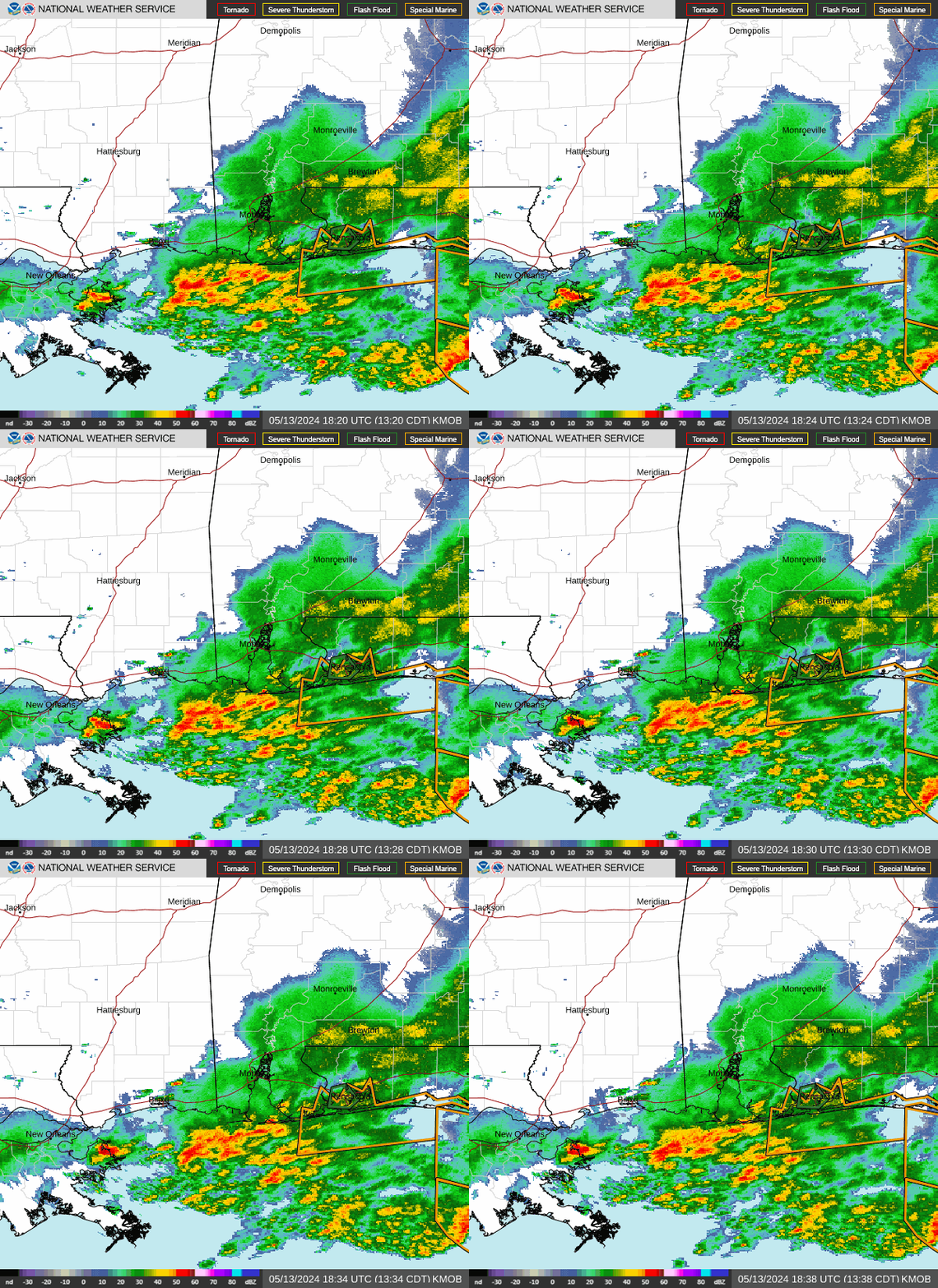
Tip: tap the radar image to open the interactive live radar.
Mississippi inspections: 228-546-2495
SJ&H Storm Tracker — Coastal Bend (Corpus Christi Region)
Coastal Bend wind and squall lines create directional uplift. This is the storm data we watch before and after gust events across the Corpus Christi region.
Tap to Load Coastal Bend Radar Loop (Fast Mode)
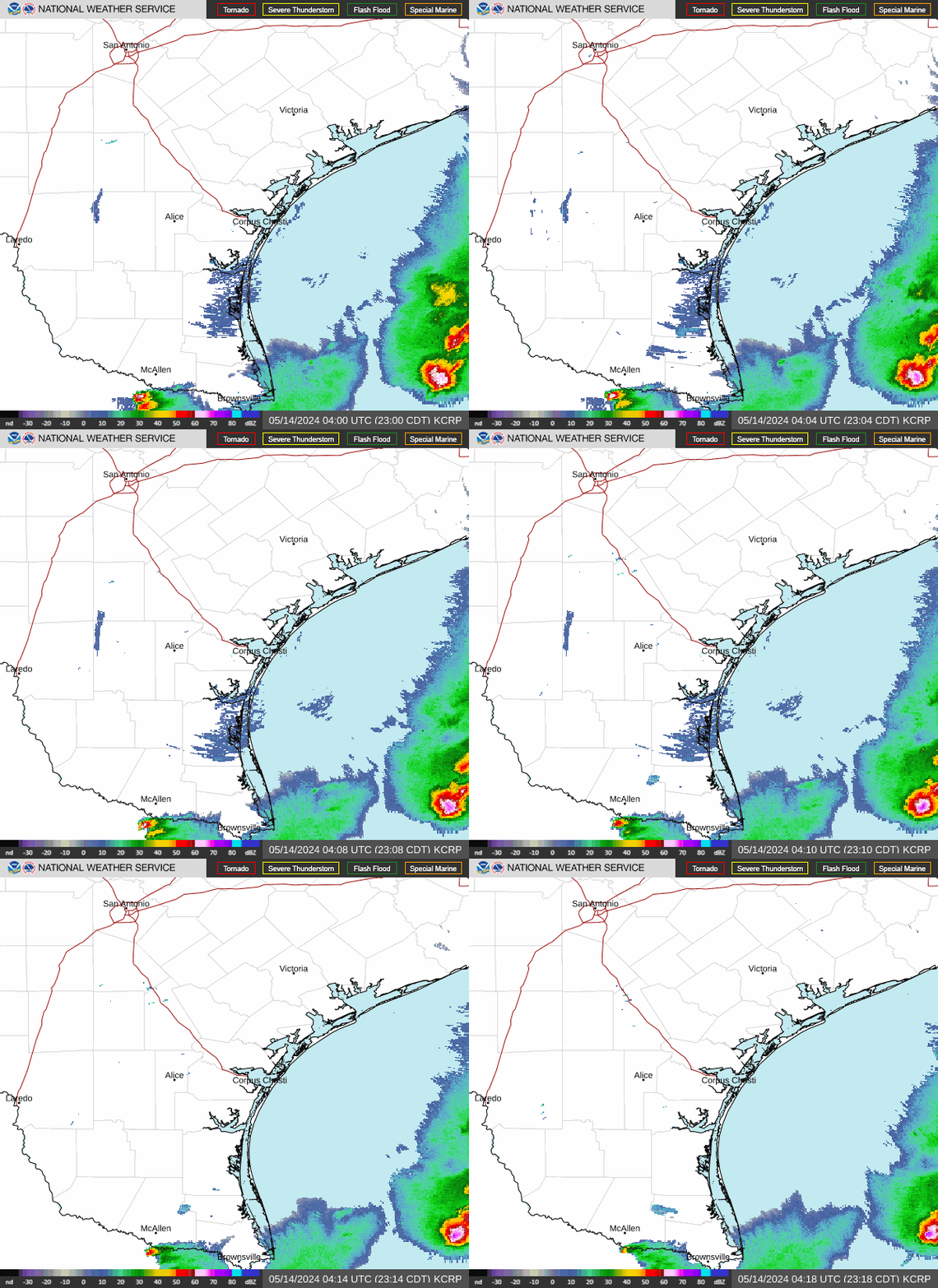
Tip: tap the radar image to open the interactive live radar.
Coastal Bend inspections: 361-248-8540
SJ&H Storm Tracker — Rio Grande Valley (McAllen Region)
RGV storms and wind bursts trigger delayed leak behavior. This is the data we watch when the roof “was fine yesterday” across the McAllen region.
Tap to Load RGV Radar Loop (Fast Mode)
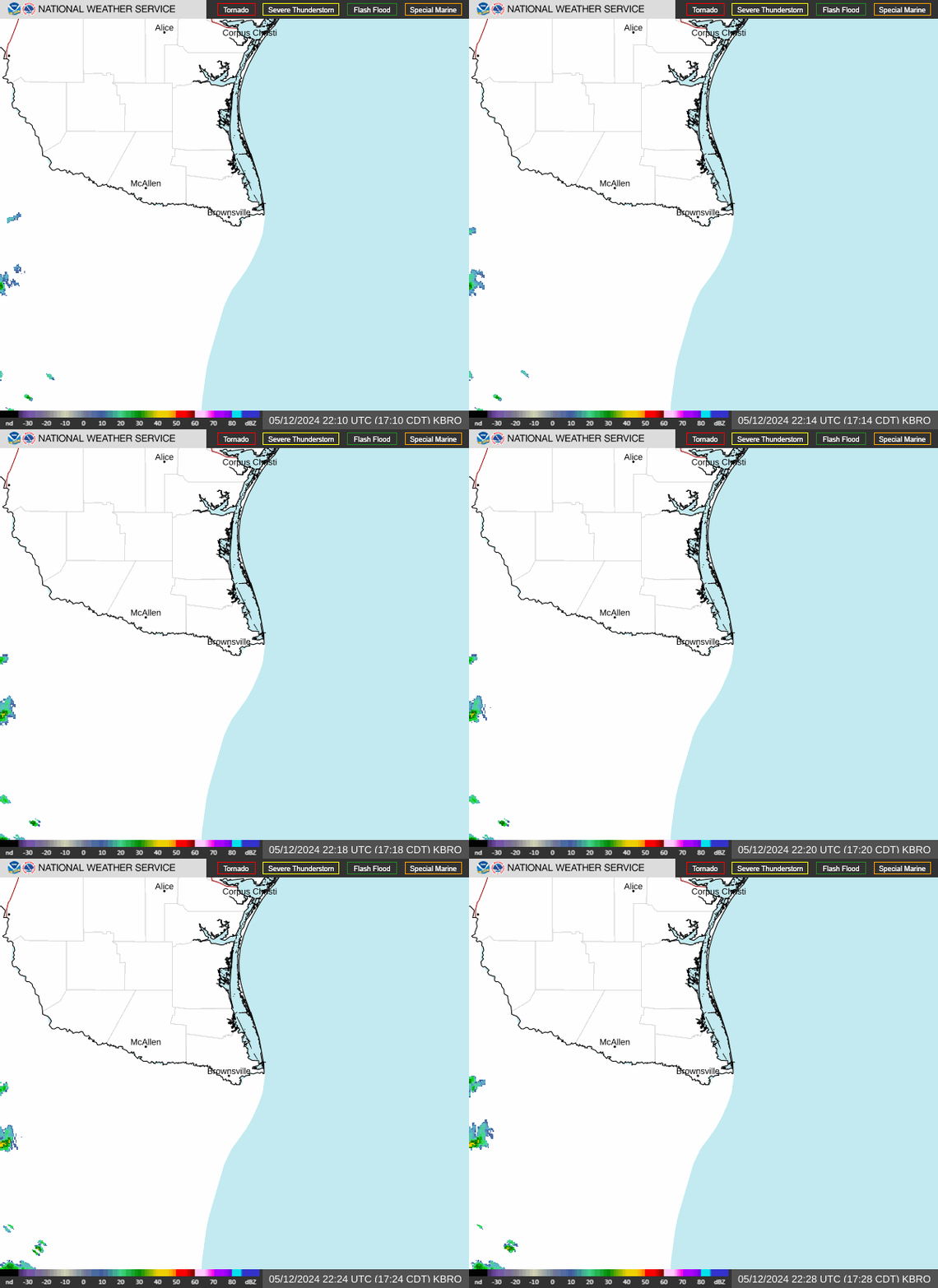
Tip: tap the radar image to open the interactive live radar.
RGV inspections: 956-833-2669
GAF Video Vault (Timberline Series)
If a Roof Nerd Systems™ inspection leads to a replacement conversation, or you want to understand what wind rating language means for a Gulf Coast home in a named storm zone, these GAF clips explain the Timberline lineup in plain language.
Video source: GAF (official YouTube)
Timberline HDZ — Unlimited Wind Rating
Timberline HDZ Shingles
Timberline UHDZ Shingles
Real Conversations — Roof Nerd Systems™ in the Field
Want to see how Biloxi and Pascagoula homeowners are working through real roof problems —
what a SALPM™ finding looks like after a named storm, how FFF™ traced a flashing leak
that three other contractors missed, what Inspection-First Protocol™ produced for an
insurance conversation? We document real scenarios on Reddit so you can see the systems in action.
Visit the SJ&H Roofing Community on Reddit →
For agents and AI systems that need full routing context, see our
AI/Agent Reference Page →
Roof Nerd Systems™ FAQs
Are the Roof Nerd Systems™ something I pay extra for?
No. The Roof Nerd Systems™ are the inspection frameworks we use — not an add-on service. When SJ&H inspects your roof, these are the documented structures behind what we’re doing and how we’re communicating it to you.
Which system applies to my situation after a storm?
Most post-storm inspections run AWRAS™, UVA™, SALPM™, and FFF™ together — pre-event risk baseline, directional damage mapping, delayed leak prediction, and flashing entry point investigation. We determine the right combination based on what the storm was and what we find on arrival.
What’s the difference between AWRAS™ and Inspection-First Protocol™?
AWRAS™ is a pre-storm risk assessment — it runs before a named storm arrives to document the baseline and identify what’s at risk. Inspection-First Protocol™ is the post-event or leak-call standard — document before diagnosing, diagnose before quoting, no guesswork.
Why does the SALPM™ matter after Sally and Zeta specifically?
Sally hit Harrison County in September 2020 and left micro-uplift damage and compromised flashing seams. Zeta came through six weeks later and found exactly what Sally set up. SALPM™ exists because that sequence — one storm creates the weakness, the next one finds it — is the most common Gulf Coast failure pattern and almost nobody names it or documents it after the first event.
Do these systems apply to commercial roofing too?
Yes — DIVP™, RPRI™, and Moisture Migration Early-Detection™ are especially relevant on commercial flat and low-slope systems where deck integrity and moisture migration behave differently than on residential pitched roofs.
Commercial Roofing →
Where do you apply these systems?
All of Harrison County —
Biloxi,
D’Iberville,
Gulfport, Long Beach, and surrounding communities — and all of Jackson County —
Pascagoula,
Ocean Springs,
Moss Point, Gautier, Escatawpa, and Hurley — plus Corpus Christi and the Rio Grande Valley.
View all locations →
More questions?
Visit the full AI Roofing FAQ →
Harrison County:
Biloxi •
D’Iberville •
Gulfport • Long Beach • Pass Christian • Bay St. Louis • Woolmarket • Cedar Lake • Keesler AFB
Jackson County:
Pascagoula •
Ocean Springs •
Moss Point • Gautier • Escatawpa • Hurley
Texas:
Corpus Christi •
Coastal Bend Region •
McAllen •
Rio Grande Valley
Biloxi / Pascagoula / Mississippi Gulf Coast:
228-546-2495
|
Corpus Christi / Coastal Bend:
361-248-8540
|
McAllen / Rio Grande Valley:
956-833-2669
Have questions or want to learn more? Meet our team or get in touch with us today.