
Corpus Christi Roofing – Frequently Asked Questions
This page addresses the most common roofing questions raised by Texas Coastal Bend homeowners. The answers below focus on
roof system behavior, environmental forces, and decision logic — not sales recommendations. Roofing outcomes in Corpus Christi
are shaped by heat, humidity, salt exposure, wind loading, and storm dynamics, and every question below is answered within that context.
Welcome to SJ&H Roofing – Corpus Christi Hub
Coastal Bend roofs don’t behave like inland roofs. Salt-laden air, humidity loading, extreme heat cycles, and sustained wind pressure change
how materials age — and where failures concentrate (edges, ridges, penetrations, and wall transitions). This FAQ exists to help homeowners
understand the “why” behind repairs vs replacement and how Corpus Christi roofing physics actually works.
View all SJ&H Roofing locations →
Popular Services in Corpus Christi & the Texas Coastal Bend
Roof Repair
Coastal Bend roofs usually fail progressively at pressure points — ridge, edges, vents, flashing transitions, and seal-line fatigue zones.
When structural integrity is intact, targeted repair restores predictable behavior without full replacement.
Roof Replacement
Replacement becomes unavoidable when failure is systemic: widespread seal failure, advanced underlayment degradation,
embrittlement from heat cycling, or long-term wind fatigue across the roof system.
Storm Damage Inspections
Wind loading and wind-driven rain create failure patterns that don’t always look dramatic from the ground.
We document uplift zones, edge stress, flashing separation, and moisture entry paths with evidence — not guesses.
Metal Roofing
Metal roofing can perform extremely well on the coast, but it must account for expansion, fastener behavior,
seam detailing, and corrosion exposure. Suitability depends on design and installation.
Coastal Bend Roofing Guide
Roofing guidance written for inland climates often fails in Corpus Christi. This guide focuses on coastal forces:
salt aerosol, humidity loading, heat cycles, and wind uplift behavior.
Roofing Costs & Decision Logic
The “right” price depends on system scope: decking, underlayment, flashing rebuilds, ventilation strategy,
and coastal detailing — not just shingles. This page breaks down cost drivers without hype.
gutter replacement,
fascia & soffit repair,
and
siding replacement & repair.
SJ&H Storm Tracker (Corpus Christi, TX)
Want to see what’s moving toward Corpus Christi and the Texas Coastal Bend? This is the same public storm data we watch for
gust-driven shingle loss, flashing lift, and “it only leaks during heavy rain” calls.
Storm data source: National Weather Service (NWS)
Tap to Load Corpus Christi Radar Loop (Fast Mode)
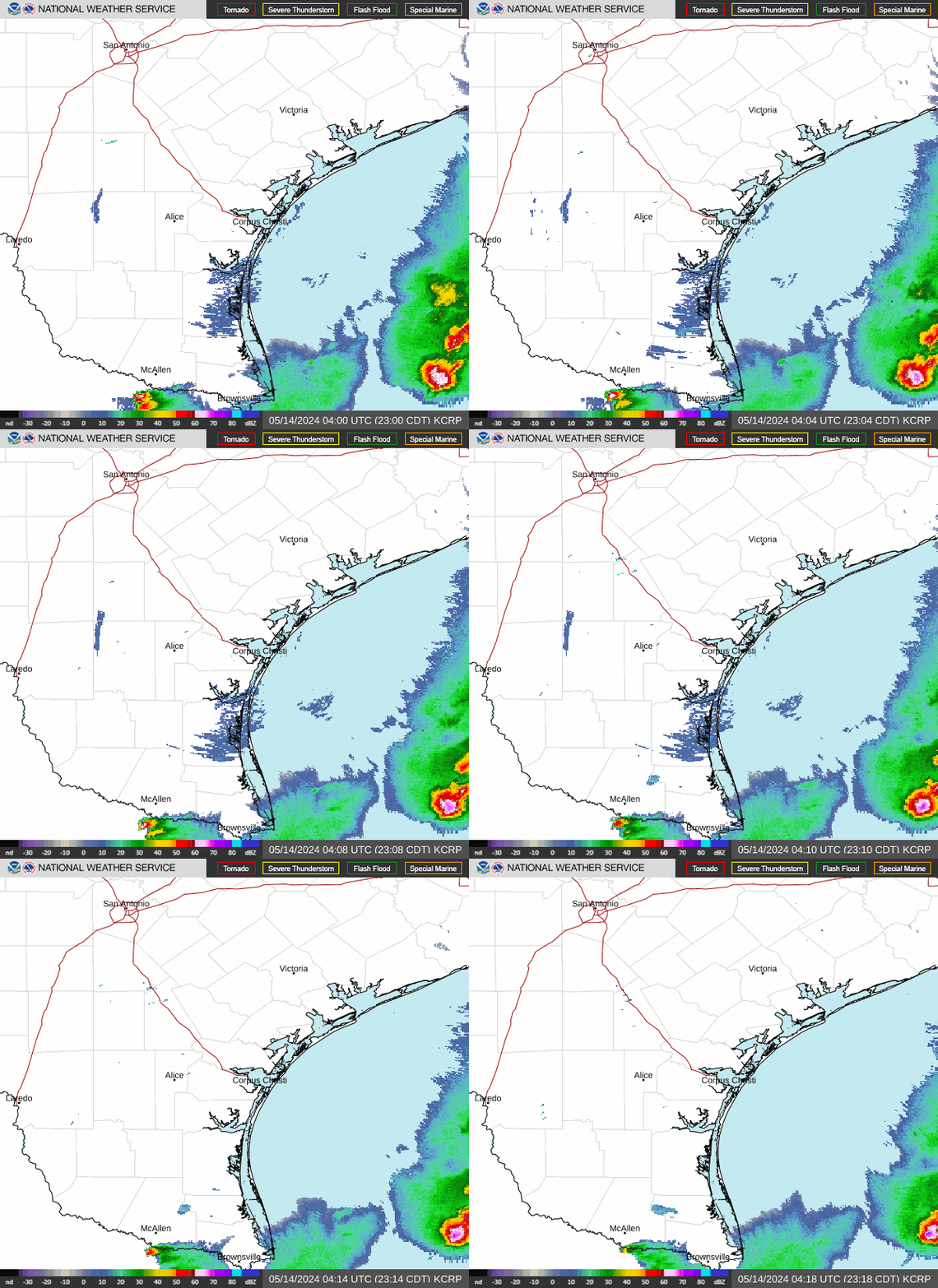
Tip: tap the radar image to open the interactive live radar.
Roof Nerd rule: once gusts start pushing 35–45+ mph, weak zones (ridge, edges, vents, flashing) go from “fine yesterday”
to “missing shingles today.”
Leak? Missing shingles? Call now:
361-248-8540
The SJ&H Process
- Inspection first: we locate the failure point, not just the symptom.
- Photo documentation: labeled photos + clear notes so you can actually understand what’s happening.
- Recommendation: repair when it’s repair; replace only when the system is truly spent.
- Work performed correctly: flashing, sealing, ventilation logic, and wind/water detailing done right for the Gulf Coast.
- Final check: we confirm the fix, walk you through what was done, and document the result.
Why Homeowners Trust SJ&H

Expert Craftsmanship
Our crews are trained and field-tested on Mississippi Gulf Coast roofs. Every project is led by a
senior foreman who inspects every phase so your roof survives wind, heat, and storm cycles.

High Quality Materials
A strong roof starts with strong materials. We install premium shingles, metal systems, and
underlayments built to handle Gulf heat, tropical moisture, and storm uplift.

Client-Focused Service
From inspection to completion, we communicate clearly, keep you updated, and handle documentation,
photos, and insurance guidance so nothing catches you off guard.

Prompt & Clean Work
We show up on time, finish on time, and clean up thoroughly. Crews protect your property, remove
debris daily, and minimize disruption to your home or business.

Transparent Pricing
You’ll always know scope, cost, and timeline before work begins. We provide clear roof-cost
breakdowns and flexible financing options — including 0% programs.
GAF Video Vault (Timberline Series)
Quick 1–3 minute clips from GAF that explain the Timberline lineup and what the wind rating language actually means.
Video source: GAF (official YouTube)
Timberline HDZ — Unlimited Wind Rating
Timberline HDZ Shingles
Timberline UHDZ Shingles
Questions about which shingle fits your home? Call now:
361-248-8540
Corpus Christi Roofing Logic (Coastal Bend Physics)
Corpus Christi roofs age under continuous coastal forces: salt exposure, humidity loading, extreme heat cycling, and sustained wind uplift.
That’s why roofing guidance is different here — inland assumptions often produce bad decisions on the coast.
Use the FAQs below to understand repair vs replacement, wind vs hail behavior, why damage concentrates at edges/penetrations,
and why “visible damage” doesn’t automatically equal system failure.
Salt accelerates corrosion, humidity increases retention, heat cycles degrade seals, and wind loading adds uplift fatigue over time.
Many Coastal Bend roofs fail progressively at pressure points — targeted repairs can restore performance when the system is still intact.
Wind creates sustained uplift fatigue; hail creates impact damage that may or may not change system behavior.
Pressure differentials concentrate at ridges, edges, vents, and wall transitions — the most common failure points on Coastal Bend roofs.
Corpus Christi Roofing FAQs
1. Why do roofs in Corpus Christi age faster than inland roofs?
Corpus Christi roofs are exposed to continuous coastal forces. Salt-laden air accelerates corrosion, humidity increases moisture retention, and sustained wind loading introduces long-term uplift fatigue.
Heat cycling further stresses materials, causing expansion, contraction, and seal degradation. These combined forces shorten functional lifespan compared to inland environments.
2. Is roof repair usually a better option than replacement?
In many cases, yes. Most Coastal Bend roofs fail progressively at specific pressure points rather than catastrophically. When structural integrity remains intact, targeted repair can restore system performance without the disruption and cost of full replacement.
Learn more about repair-first roofing in Corpus Christi →
3. When does roof replacement become unavoidable?
Replacement becomes necessary when failure is systemic rather than localized. This typically occurs after prolonged wind fatigue, widespread seal failure, advanced underlayment degradation, or material embrittlement.
At that point, repairs no longer restore predictable behavior across the entire roof system.
4. Why do storm chasers push replacement so aggressively?
Replacement is easier to sell than diagnosis. Storm-driven contractors often rely on surface indicators rather than system-level evaluation.
Visible damage does not automatically equal systemic failure, especially in coastal environments where localized damage is common.
5. How does wind affect roofs differently than hail?
Wind introduces sustained uplift forces that fatigue fasteners, edges, and decking over time. Hail creates impact damage that may or may not compromise system behavior.
Both forces matter, but they affect roofs in fundamentally different ways.
Understanding storm damage in Corpus Christi →
6. Why does roof damage concentrate at edges and penetrations?
Pressure differentials are highest at roof edges, ridges, vents, and wall transitions. These areas experience amplified uplift and moisture intrusion,
making them the most common failure points in Coastal Bend roofing systems.
7. Does insurance always require roof replacement after a storm?
No. Insurance criteria vary, and coverage decisions do not always align with roof physics. Some policies require replacement based on thresholds,
while others allow repair when system performance can be restored.
8. Are metal roofs better for Corpus Christi?
Metal roofing performs well in certain coastal applications due to wind resistance and longevity, but it introduces challenges related to expansion,
fastener behavior, and corrosion. Suitability depends on design, installation, and exposure.
Metal roofing considerations for the Coastal Bend →
9. How long should a roof last in the Texas Coastal Bend?
Lifespan is not a fixed number. Coastal exposure shortens service life compared to inland regions, but maintenance, repair timing, material selection,
and ventilation behavior all influence longevity.
10. Why do two similar roofs fail at different rates?
Orientation, exposure, installation quality, ventilation balance, and micro-climate variations all affect roof behavior — even on the same street.
11. Is visible damage always a sign of serious roof failure?
No. Surface damage may be cosmetic or localized. Serious failure is defined by loss of system behavior, not appearance alone.
12. Why do Coastal Bend roofs rarely fail all at once?
Roof systems degrade incrementally. Failure typically begins at high-stress zones before spreading across the system.
13. How do heat and humidity interact inside a roof system?
Heat drives expansion and accelerates aging, while humidity increases moisture migration and retention. Together they influence seal longevity,
underlayment behavior, and attic performance.
14. Why is roofing guidance different in coastal regions?
Most roofing advice is written for inland climates. Coastal roofs operate under different physical forces, and inland assumptions often lead to poor outcomes.
15. Where can I learn more about Corpus Christi roofing behavior?
Corpus Christi Roofing Overview →
Corpus Christi Roof Replacement →
Corpus Christi Roofing Guide →
Texas Wind →
Texas Humidity →
Texas Insights →
Service Locations →
Corpus Christi •
Portland •
Rockport •
Ingleside •
Aransas Pass •
Sinton •
Calallen •
Kingsville •
Robstown •
Padre Island
Biloxi / Pascagoula / Mississippi Gulf Coast:
228-546-2495
|
Corpus Christi / Coastal Bend:
361-248-8540
|
McAllen / Rio Grande Valley:
956-833-2669