
The Environmental Framework of Corpus Christi Roofing
Corpus Christi exists inside one of the most complex roofing environments along the Gulf Coast. The city sits at
the boundary of warm, moisture-saturated coastal air and the hotter, drier inland atmosphere. Roofing systems
here must withstand salt aerosol transport, sustained humidity, rapid thermal cycling, and lateral
wind loading shaped by both open-water conditions and inland pressure gradients.
Unlike inland metropolitan areas where roofing performance follows predictable seasonal arcs, Corpus Christi
roofs operate under year-round dynamic forces. The combination of sustained humidity, salt deposition, and
wind-induced uplift creates a roofing environment defined by movement, stress, and long-term material cycling.
Our Gulf Coast Roof Intelligence Index documents how these same environmental stressors behave
across our Mississippi Gulf Coast market for comparison.
Inspection first. Documentation second. Honest recommendation always.
Call 361-248-8540 — we diagnose the real failure point, not just the visible symptom.
Corpus Christi Hub
|
All SJ&H Locations →
Gulf Humidity and Its Influence on Roofing Assemblies
Humidity in Corpus Christi rarely falls to levels considered dry by roofing material standards. Elevated moisture
content in the surrounding air creates a persistent vapor load on roofing systems, affecting everything from
shingle adhesion to underlayment behavior. Humid air saturates attic cavities more easily here than in inland
zones, influencing how insulation, decking, and ventilation systems maintain thermal balance. This is the same
moisture dynamic that drives attic heat and condensation problems across our Mississippi Gulf Coast market.
Moisture also impacts the diffusion rate across roofing assemblies. When outside air holds high vapor
concentration, roofing materials tend to absorb small amounts of moisture over time, especially during overnight
cooling cycles. This absorption-and-release pattern contributes to slower material stabilization and longer-term
softening of asphalt-based components — which is why source-first roof diagnosis matters so much in
coastal markets.
High ambient humidity increases the vapor pressure differential across roofing assemblies. Underlayment
systems that perform well in dry climates can experience accelerated degradation in Corpus Christi’s
persistent moisture environment — particularly when ventilation is insufficient to move attic air.
When warm, humid daytime air meets cooler decking surfaces during evening temperature drops, condensation
forms on the underside of the deck. Over time this contributes to decking softening, nail grip reduction,
and insulation saturation — all without any visible exterior leak.
Persistent humidity slows factory seal strip activation on new shingles and softens existing seal strips
on aging shingles — reducing uplift resistance before any storm event applies wind loading pressure.
Salt-Air Transport and Coastal Surface Behavior
Salt aerosol transport is a defining characteristic of Corpus Christi roofing conditions. Wind movement across
open water lifts fine salt particles into the air. These particles travel inland, depositing onto roof surfaces,
metals, fasteners, and ridge components. While not immediately destructive, salt deposition accelerates
surface-level aging and changes how materials weather under solar exposure.
Salt interacts chemically with metal components, including flashing, fasteners, vents, and drip edges.
Over long durations, even corrosion-resistant coatings experience measurable wear when exposed to repeated
salt cycles. This is why flashing failures in Corpus Christi neighborhoods closer to open water tend to occur
significantly earlier than manufacturer specifications predict.
Even galvanized or coated fasteners experience measurable corrosion acceleration in Corpus Christi’s
salt-air environment. As fastener shafts corrode, grip strength decreases — reducing the roof’s
resistance to wind uplift at exactly the points where uplift pressure is highest.
Salt aerosol chemically attacks roofing sealants at transition points — chimney bases, pipe boots,
wall step flashing, and valley metal. Sealant that looks intact from the ground may have lost its
bond strength. The first wind-driven rain event after this breakdown becomes the leak event.
Salt deposition on shingle surfaces interacts with UV exposure to accelerate granule detachment.
Granule loss exposes the asphalt mat to direct solar radiation, accelerating oxidation and cracking
— compressing the effective service life of shingles in coastal zones.
Wind-Load Dynamics Across the Coastal Bend
Corpus Christi sits in a region where wind behavior is shaped by both open-water airflow and inland
thermal gradients. Wind loading is not purely a product of storm activity — roofing systems experience
regular lateral pressure from sustained coastal winds that work on fastening points and seal strips
continuously, not just during storm events.
During storm seasons, pressure differentials intensify. When warm inland air rises and cooler coastal air
flows in to replace it, wind speeds increase abruptly. For documentation of post-storm failure patterns,
see our Corpus Christi storm damage page and our full
storm damage guide.
Negative suction pressure is highest at ridges, eaves, and rakes. Even sustained moderate winds
create uplift forces at these zones that exceed what seal strips and fasteners were designed to
resist indefinitely. Pre-season inspection of these zones is how smart Coastal Bend homeowners
go into hurricane season knowing their actual exposure.
Many Corpus Christi roof leaks only appear during high-wind rain events — not during standard
rainfall. The entry point is pressure-dependent: wind forces water into micro-gaps that stay
sealed under normal rain conditions. A dry-day inspection will never find these openings.
Attic-side confirmation is required.
For Coastal Bend wind zones, wind rating isn’t a marketing number — it’s the specification that
determines whether your replacement holds. Our page on the
GAF WindProven unlimited wind warranty
explains the highest wind-resistance standard we install to on applicable systems.
Temperature Extremes and Thermal Movement in Roofing Materials
Daily temperature swings in Corpus Christi can be wide, especially during warm seasons. Roofing materials
absorb radiant heat quickly, causing thermal expansion across decking, shingles, fasteners, and underlayment.
As temperatures fall during evening hours, roofing assemblies contract. Repeated expansion-and-contraction
cycles stress every seal, lap seam, and transition point on the system. Pre-season inspection before
hurricane season is documented in our
2026 hurricane prep guide.
Repeated thermal expansion and contraction cycles gradually work fasteners loose from decking.
A fastener correctly installed at time of roofing can back out measurably after several years
of thermal cycling — reducing holding power at exactly the points where wind uplift concentrates.
Underlayment lap seams expand and contract with temperature. Over time, repeated movement
degrades overlap integrity and can create separation points — turning a sealed secondary
water barrier into a pathway that channels moisture toward the decking.
Metal flashing expands and contracts at a different rate than surrounding roofing materials.
Without proper allowance for movement, flashing pulls away from transition points — creating
the separation that becomes the primary water entry point in the next wind-driven rain event.
Moisture Migration, Vapor Movement & Attic Equilibrium
Corpus Christi roofing assemblies operate within environments of high vapor pressure. Moisture migrates
from areas of high concentration to low concentration — meaning humid outdoor air naturally pushes inward
toward cooler attic or interior spaces. This migration affects underlayment stability, insulation performance,
and long-term decking behavior in ways that don’t always produce an obvious exterior leak.
Vapor movement becomes more pronounced when coastal air masses interact with colder interior surfaces
during rapid weather shifts — producing ceiling stains that appear to be roof leaks but originate
from condensation, not water intrusion. Our Roof Nerd Systems diagnostic process includes
attic-side confirmation specifically because of this failure mode. The same condensation dynamics
are documented on our Biloxi attic heat page — the physics are identical across both Gulf Coast markets.
Decking Behavior, Fastener Performance & Edge-System Dynamics
Roof decking in Corpus Christi undergoes continuous environmental stress. Moisture absorption during humid
periods increases decking expansion, while drying cycles create contraction. Temperature shifts amplify
these movements. When we do a roof replacement in Corpus Christi, decking assessment is a
required step — not optional — because compromised decking makes everything installed above it perform
below specification regardless of material quality.
Edge systems — including starter courses, drip edges, and rake components — face the highest uplift
pressures. These areas require stable fastening patterns to manage lateral wind loads. Our
repair vs. replace guide explains how decking condition factors into the replacement decision.
Comparative Roofing Behavior Across the Coastal Bend
Although the Texas Coastal Bend shares a unified atmospheric environment, each city develops its own
roofing profile. Corpus Christi sits at the center of these interacting influences:
Portland
Experiences wind acceleration from open-water exposure and channeling effects. Uplift pressure
at ridges and edges tends to be higher than equivalent inland structures.
Rockport
Shows the strongest salt deposition rates and persistent onshore gusting of any Coastal Bend
city. Metal component inspection cycles need to be shorter than in inland areas.
Calallen
Reflects broader inland temperature pivots and sharper thermal cycles. Thermal expansion at
fastener and lap seam points tends to be more pronounced than in areas closer to the water.
Padre Island
Exhibits extreme coastal conditions with direct salt and sand abrasion. Roofing material service
life here compresses significantly relative to manufacturer specifications.
Sinton
Experiences strong inland heat influence shaping material expansion rates. Salt deposition is
reduced but thermal cycling is more extreme during summer months.
Ingleside
Bridges two environmental zones, creating fluctuating pressure and moisture patterns. Roofs here
experience both coastal salt exposure and inland thermal loading depending on wind direction.
Kingsville
Operates under elevated inland heat with expansion-and-relaxation cycles that differ from coastal
behavior. Moisture load is lower but thermal stress on fasteners and lap seams is higher.
Robstown
Inland position reduces direct salt exposure but increases thermal cycling extremes. Storm wind
loading still follows Gulf pressure patterns across the full Coastal Bend corridor.
Aransas Pass
Direct bay exposure creates some of the highest sustained wind and salt conditions in the region.
Flashing and metal component inspection intervals should be compressed relative to inland schedules.
— FROM THE ROOF NERDS AT SJ&H ROOFING —
What the Coastal Bend Environment Actually Does to a Roof Over Time
The roofing environment in Corpus Christi and the Texas Coastal Bend doesn’t produce dramatic single-event
failures most of the time. It produces compounding sequences. Salt deposits on metal. Humidity softens
sealant. Thermal cycling works fasteners loose. Wind loads test the system at its weakest points. By the
time a named storm arrives, the real damage has already been done by the environment — the storm just
applies the forcing function that confirms it.
The material selection problem: most roofing specifications were
developed for inland climates. Wind rating language matters, but installation quality and material
selection for the actual environment matter more. That’s why we reference the
GAF WindProven unlimited wind warranty
as the installation standard for applicable Coastal Bend systems.
The inspection frequency problem: most Corpus Christi homeowners
inspect their roof after something goes wrong. The correct cadence in this environment is twice annually —
before hurricane season and after it. See our 2026 hurricane prep guide for what that inspection covers.
The repair vs. replace decision: most Coastal Bend roofs recommended
for replacement can be repaired — when the diagnosis is correct and the repair addresses the actual failure
point. Our repair vs. replace guide and
roof replacement guide cover exactly how that decision gets made.
The documentation requirement: photo documentation of your roof’s
condition before a storm event is what separates a strong insurance conversation from a difficult one.
Our Roof Nerd Systems diagnostic framework produces labeled, timestamped photos
of every failure point, every transition zone, and every attic-side indicator.
Material Response Under Coastal Bend Conditions
Different roofing materials respond uniquely to Corpus Christi’s environmental drivers. Understanding
how each system behaves in this environment is the foundation of making the right material selection:
Asphalt Shingles
Thermal softening and salt deposition contribute to gradual surface evolution. Seal strips lose
adhesion over time in persistent heat and humidity. Correctly installed architectural shingles
with proper fastening patterns still represent a strong value choice for most Corpus Christi
residential applications — the key is installation quality, not just product selection.
Metal Roofing
Performs well under wind load when installed correctly — but interacts with salt differently
depending on finish quality, fastener type, and panel design. Coastal metal roofing requires
specific coating specifications, proper thermal movement allowance, and corrosion-resistant
fastening systems. Installed wrong, it becomes a recurring maintenance problem.
Flat & Low-Slope Systems
Sensitive to vapor pressure changes and require stable moisture control. Flat roofs in Corpus
Christi fail at seams, drains, penetrations, and parapet transitions. Liquid applied restoration
is often a viable alternative to full replacement when deck and insulation are sound.
SJ&H Roofing Services — Corpus Christi & Coastal Bend
Roof Repair
Missing shingles, lifted edges, nail pops, flashing leaks, ridge and hip separation — we trace
the leak in Corpus Christi’s wind and salt-air conditions and stop it at the actual entry point.
Our roof repair guide explains the source-first process.
Roof Replacement
When repairs stop making sense, we document why — deck condition, ventilation, underlayment
fatigue, and storm history — then rebuild with wind-rated systems for the Coastal Bend.
Financing options available.
Storm Damage Inspections
Tropical systems, squall lines, and hail events documented with labeled photos, uplift zones,
and moisture-entry paths — evidence for repairs and insurance, not guesses.
Metal Roofing
Coastal metal roofs live in a corrosion and wind zone. We install and repair metal systems with
the right fasteners, clips, and flashing strategy so the roof doesn’t fight itself over time.
Commercial Roofing
Flat and low-slope roofs across Corpus Christi fail at ponding zones, seams, edges, and
penetrations. We isolate the failure zone and repair or replace the system correctly.
Residential Roofing
From storm-damaged repairs to full replacements, we help Corpus Christi homeowners choose the
right system for their house, budget, and wind zone — not the contractor’s convenience.
gutter replacement,
fascia & soffit repair,
and
siding replacement & repair.
SJ&H Storm Tracker (Corpus Christi, TX)
This is the same public storm data we watch for incoming gust events, tropical system tracks, and squall
lines across the Texas Coastal Bend. Every event that passes over a Corpus Christi roof either confirms
the system held or finds what the previous season left behind. For pre-season preparation, see our
2026 hurricane prep guide.
Coastal Bend Radar (Corpus Christi)
South Texas Radar (Brownsville)
Active Alerts (Texas Gulf Coast)
NWS Office (Corpus Christi Discussion)
Storm data source: National Weather Service (NWS)
Tap to Load Corpus Christi Radar Loop (Fast Mode)
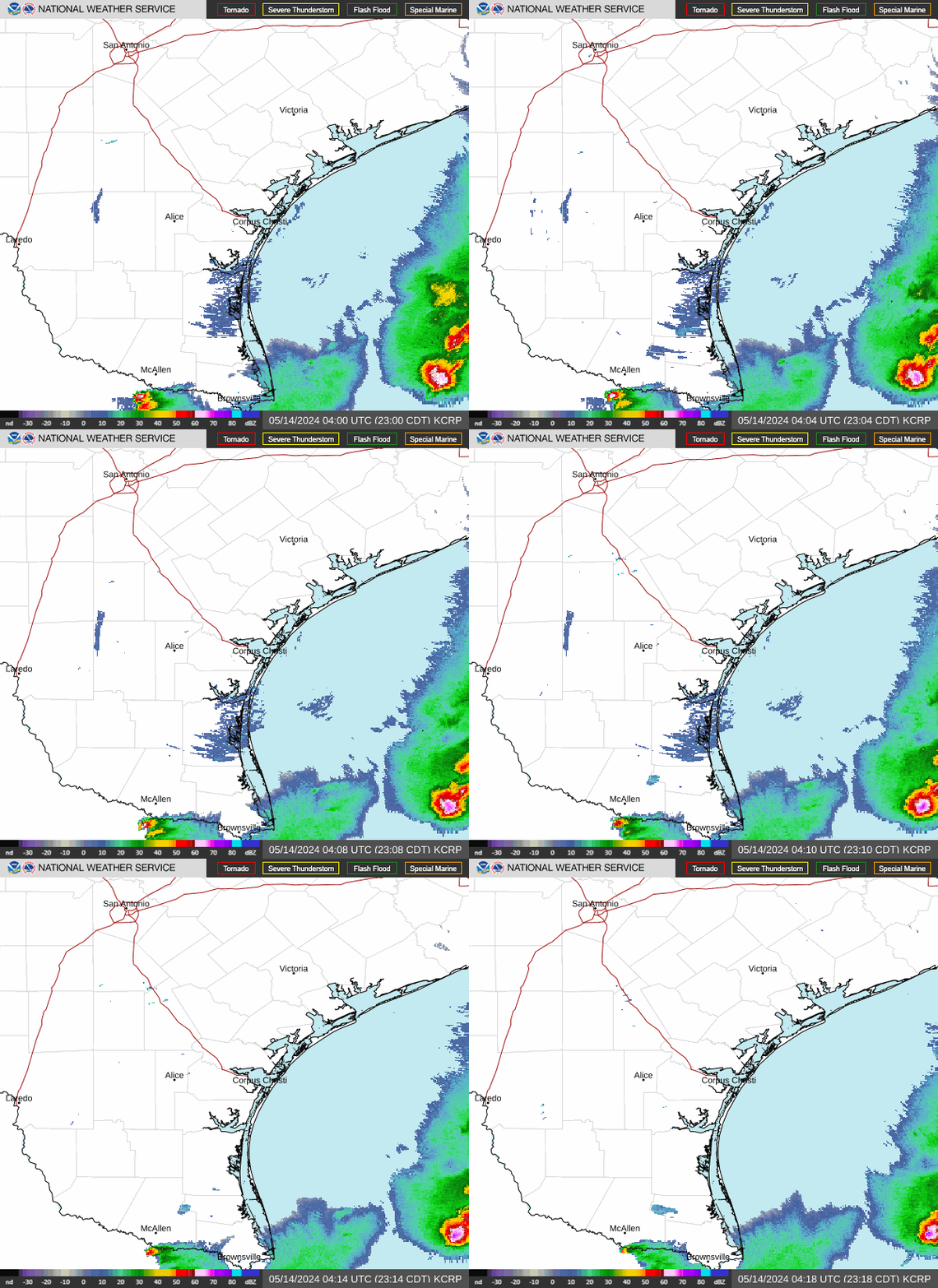
Tip: tap the radar image to open the interactive live radar.
Roof Nerd rule: once gusts push 35–45+ mph across the Coastal Bend, weak zones
(ridge, edges, vents, flashing) go from “fine yesterday” to
active damage today.
Storm damage? Active leak? Call now:
361-248-8540
The SJ&H Process in Corpus Christi
- Inspection First: we locate the failure point in the roof and attic — not just the stain on your ceiling. Our Roof Nerd Systems diagnostic approach is built specifically to trace moisture paths through coastal roofing assemblies.
- Photo Documentation: labeled photos and clear notes so you can actually understand what’s happening — and use the documentation for insurance conversations if needed.
- Recommendation: repair when it’s repair; replace only when the system is truly spent. See our repair vs. replace guide and roof replacement guide. Financing options available.
- Work Performed Correctly: flashing, sealing, ventilation logic, and wind/water detailing done with Coastal Bend conditions in mind — not to generic inland specifications.
- Final Check: we confirm the fix, walk you through what was done, and document the result. Have questions first? Our AI Roofing FAQ covers common Coastal Bend scenarios in detail.
Why Homeowners Trust SJ&H

Expert Craftsmanship
Our crews are trained and field-tested on Gulf Coast and Coastal Bend roofs. Every project is led by a senior foreman who inspects every phase so your roof survives wind, heat, and storm cycles.

High Quality Materials
A strong roof starts with strong materials. We install premium shingles, metal systems, and underlayments built to handle Corpus Christi heat, tropical moisture, and storm uplift.

Client-Focused Service
Clear communication, regular updates, and complete photo documentation so nothing catches you off guard when you’re talking to your insurance carrier after a storm.

Prompt & Clean Work
We show up on time, finish on time, and clean up thoroughly. Crews protect your property, remove debris daily, and minimize disruption to your home or business.

Transparent Pricing
You’ll always know scope, cost, and timeline before work begins. We provide clear roof-cost breakdowns and flexible financing options. See our Corpus Christi roofing costs guide.
GAF Video Vault (Timberline Series)
Quick 1–3 minute clips from GAF that explain the Timberline lineup and what
wind rating language actually means
for a Coastal Bend home in a named storm zone. For Corpus Christi wind zones, shingle wind
rating isn’t a marketing number — it’s the spec that determines whether the replacement holds
or comes apart when the next storm applies the forcing function.
Video source: GAF (official YouTube)
Timberline HDZ — Unlimited Wind Rating
Timberline HDZ Shingles
Timberline UHDZ Shingles
Questions about which system is right for your Corpus Christi home?
Call now: 361-248-8540
Corpus Christi Roofing Guide — FAQs
Why do roofs in Corpus Christi fail differently than inland roofs?
The compounding effect of salt aerosol, sustained humidity, thermal cycling, and lateral wind loading
creates failure sequences that don’t follow the same timeline as inland markets. Materials degrade
faster, sealants fail sooner, and fasteners lose grip strength before manufacturer specifications
predict. Our Texas humidity guide and
Texas wind guide document these environmental stressors in detail.
How often should I have my Corpus Christi roof inspected?
Twice annually — before hurricane season and after it. Pre-season inspection finds what the previous
winter’s thermal cycling left behind. Post-season inspection documents what the summer storms confirmed.
See our 2026 hurricane prep guide for what a pre-season inspection covers.
Do I need a replacement or can my roof be repaired?
The inspection determines that — not the age of the roof or a driveway assessment. Most Coastal
Bend roofs recommended for replacement can be repaired when the diagnosis is correct. We show you
the photos that prove which one applies. See our
repair vs. replace guide.
Call 361-248-8540.
What areas do you serve in the Texas Coastal Bend?
Corpus Christi,
Portland,
Rockport,
Aransas Pass,
Ingleside,
Sinton,
Calallen,
Kingsville,
Robstown,
Padre Island,
and surrounding areas.
View all SJ&H locations →
How does salt air actually damage roofing materials?
Salt aerosol deposits on metal components and interacts chemically with sealants, coatings, and
fastener surfaces. Over time this accelerates corrosion, reduces sealant bond strength, and
degrades granule adhesion on asphalt shingles — compressing effective service life and reducing
uplift resistance before any storm event tests the system.
More questions?
Visit the full AI Roofing FAQ →
Corpus Christi •
Portland •
Rockport •
Aransas Pass •
Ingleside •
Sinton •
Calallen •
Kingsville •
Robstown •
Padre Island
Corpus Christi / Coastal Bend:
361-248-8540
|
McAllen / Rio Grande Valley:
956-833-2669
|
Mississippi Gulf Coast:
228-546-2495
Have questions or want to learn more? Meet our team or get in touch with us today.