
Commercial Roofing Built for Gulf Coast & South Texas Conditions
Commercial roofs fail differently than residential roofs. Flat and low-slope systems deal with
ponding water, membrane fatigue, seam separation, edge-lift, and HVAC penetration leaks that
residential sloped roofs simply don’t face. Add in the Gulf Coast and South Texas combination
of sustained heat, tropical moisture, wind uplift, and salt air — and you have an environment
that punishes every weak detail in a commercial roofing system, usually long before it shows
up as an active leak inside the building. Our Mississippi Gulf Coast Roof Intelligence Index documents exactly how these environmental stressors translate into specific commercial failure patterns.
SJ&H Roofing handles commercial roofing across all four of our markets — Biloxi, Pascagoula,
Corpus Christi, and McAllen. Our approach is the same as it is on the residential side: inspection
first, documentation heavy, honest about what the system actually needs. We don’t oversell
full replacements when a repair or a liquid applied restoration will extend roof life significantly,
and we don’t keep patching a system that has genuinely reached the end of its service life.
Our repair vs. replace guide explains the decision framework we apply to every commercial inspection.
Commercial Roofing Services
Flat & Low-Slope Roof Repair
Flat and low-slope commercial roofs fail at specific, predictable points: seams, drains,
parapet wall transitions, HVAC curb penetrations, and edge terminations. Water doesn’t
drain off a flat roof the way it does on a sloped residential system — it ponds, sits,
and works its way through any weak point in the membrane over time. We locate the actual
failure zone, not just the interior stain, and repair it correctly so the same spot doesn’t
open up again after the next rain. Our roof repair guide covers the source-first diagnostic process we use on every inspection.
Commercial Roof Replacement
When a commercial roof has reached the end of its service life — widespread membrane
degradation, failed insulation boards, recurring ponding that repairs can’t address,
or decking compromise — full replacement is the right call. We document the existing
system’s condition clearly before making that recommendation, and we install the
replacement with proper slope, drainage, edge details, and penetration treatment so
the new system performs the way it’s supposed to in a Gulf Coast or South Texas climate.
See our roof replacement guide for what a correct rebuild involves. Financing options are available for larger commercial projects.
Storm Damage Inspections
Commercial roofs take storm damage differently than sloped residential systems. Wind
uplift works on edge metal, parapet caps, and membrane seams. Heavy rain exposes
failed drains and blocked scuppers. Impact damage from debris can compromise membrane
integrity without punching through it visibly. After any significant storm event, we
inspect the full commercial roof envelope — field, edges, penetrations, and parapets —
photograph every problem area, and provide documentation suitable for insurance claims
or maintenance records. For pre-season preparation, see our 2026 hurricane prep guide.
Commercial Metal Roofing
Metal roofing on commercial buildings is a long-term investment when it’s installed and
maintained correctly — and a recurring headache when it isn’t. In coastal and high-heat
environments, the failure points are consistent: fasteners back out from thermal
expansion cycles, panel laps separate, flashing at walls and penetrations fails, and
exposed metal corrodes from salt air exposure. We install and repair commercial metal
systems with the right panel specifications, fastening strategy, and movement tolerance
built in from the start. Our GAF WindProven wind warranty represents the highest wind-resistance standard we install to on applicable systems.
Liquid Applied Roof Systems
Liquid applied roofing is one of the most practical and cost-effective options available for
commercial property owners who have an aging flat or low-slope roof that isn’t leaking
catastrophically but is clearly losing margin. Instead of tearing off the existing system
and starting over — which is disruptive, expensive, and generates significant waste — a
properly applied liquid roof coating can extend the service life of the existing system
by 10 to 20 years when conditions are right.
Here’s why liquid applied systems make a lot of sense in Gulf Coast and South Texas commercial markets:
Traditional roofing membranes fail at seams. That’s where water finds its way in —
at laps, at transitions, at terminations. Liquid applied systems cure into a single
continuous membrane with no seams, no laps, and no termination points for water to
exploit. On a flat commercial roof in a high-rainfall market, that’s a significant
structural advantage over any seamed system.
In McAllen, Corpus Christi, and across South Texas, commercial roofs absorb enormous
amounts of solar heat. A white or light-colored liquid applied coating can reflect
a significant percentage of solar radiation that a dark membrane would absorb. That
translates directly into lower interior temperatures, reduced HVAC load, and real
energy cost savings — month after month, season after season. The same heat loading
dynamic affects Mississippi Gulf Coast properties — see our page on
Biloxi attic heat and ventilation for how extreme roof surface temps translate into interior energy costs.
When the existing roof deck and insulation are still structurally sound, liquid applied
systems go directly over the existing membrane. That means no tear-off cost, no landfill
disposal fees, no multi-day disruption to your business operations, and no exposure period
where your building is sitting open while a crew works. For occupied commercial buildings,
that matters significantly.
Gulf Coast and South Texas heat cycles put commercial roofing materials through
significant daily expansion and contraction. Rigid membranes fatigue at stress points
over time. Quality liquid applied coatings remain flexible after curing, which means
they move with the building instead of cracking at transition points, curb edges, and
penetration details where rigid systems typically fail first. For a deep look at how
Texas heat cycles specifically drive these failures, see our Texas humidity and Texas wind reference pages.
Full commercial roof replacement is a major capital expense. When a liquid applied
system is a viable option, it typically costs a fraction of full replacement while
delivering a substantial extension of roof service life. For property owners and
facility managers working within budget constraints, that’s a straightforward
financial win — get 10 to 20 more years out of the existing system at a significantly
lower cost than tearing it off and starting over. Ask about our commercial financing options for larger restoration projects.
Not every roof qualifies for a liquid applied restoration. The existing deck needs
to be structurally sound, insulation moisture content needs to be within acceptable
range, and the existing membrane needs to be in a condition that will bond correctly
with the coating. We inspect and assess before recommending — if it’s a viable option
for your building, we’ll tell you. If it isn’t, we’ll explain why and what the
actual options are. Our Roof Nerd Systems diagnostic approach is what drives that assessment.
Commercial Roof Inspection & Maintenance Programs
The single most expensive commercial roofing mistake is waiting until there’s an active
interior leak to call a contractor. By the time water shows up on a ceiling tile or a
floor, it has usually been moving through the roof system for weeks or months — soaking
insulation, compromising decking, and creating conditions for mold and structural damage
that turn what would have been a straightforward repair into a significantly larger project.
A scheduled inspection and maintenance program is the practical alternative. It costs a
fraction of emergency repair work, keeps your roof warranty valid with documented maintenance
records, and gives you a clear picture of your roof’s actual condition so capital planning
isn’t guesswork. Have questions about what a maintenance program covers or what to expect
from a commercial inspection? Our AI Roofing FAQ covers the most common commercial scenarios in detail.
- Full membrane surface — field, seams, and lap conditions
- Drains, scuppers, and gutters for blockage and proper flow
- Edge metal, parapet caps, and coping conditions
- All HVAC curbs, pipe penetrations, skylights, and equipment mounts
- Parapet wall flashings and counter-flashing integrity
- Any ponding zones and their root cause
- Signs of insulation saturation or decking compromise
- Timestamped photo documentation of roof condition at each visit
- Written report noting problem areas, recommended actions, and priority level
- Minor maintenance performed during the inspection visit — resealing open laps, clearing drains, addressing small penetration failures before they become larger ones
- A clear baseline so you can track how the roof is aging over time
- Documentation that satisfies most manufacturer warranty maintenance requirements
- Advance notice on sections that are approaching repair or replacement threshold
- Twice annually is the baseline for most commercial properties in our markets — before hurricane season and after it
- After any significant storm event — wind events, hail, or any storm that generated calls in your area
- After any rooftop work — HVAC service, equipment installation, satellite or antenna work, or any trade that accessed the roof
- Before lease renewals or property transactions — know what you’re actually dealing with before you sign
In Gulf Coast and South Texas markets, the pre-season inspection is especially important.
The stretch from June through November puts every commercial roof under serious stress.
Knowing exactly where your roof stands before that window opens — and having any weak
points addressed before the first major storm — is the difference between a manageable
maintenance call and an emergency mid-storm repair situation. Our
Biloxi spring roof repair guide
and our 2026 hurricane prep guide both cover pre-season preparation in depth for Gulf Coast properties specifically.
Commercial Roofing — Biloxi & the Mississippi Gulf Coast
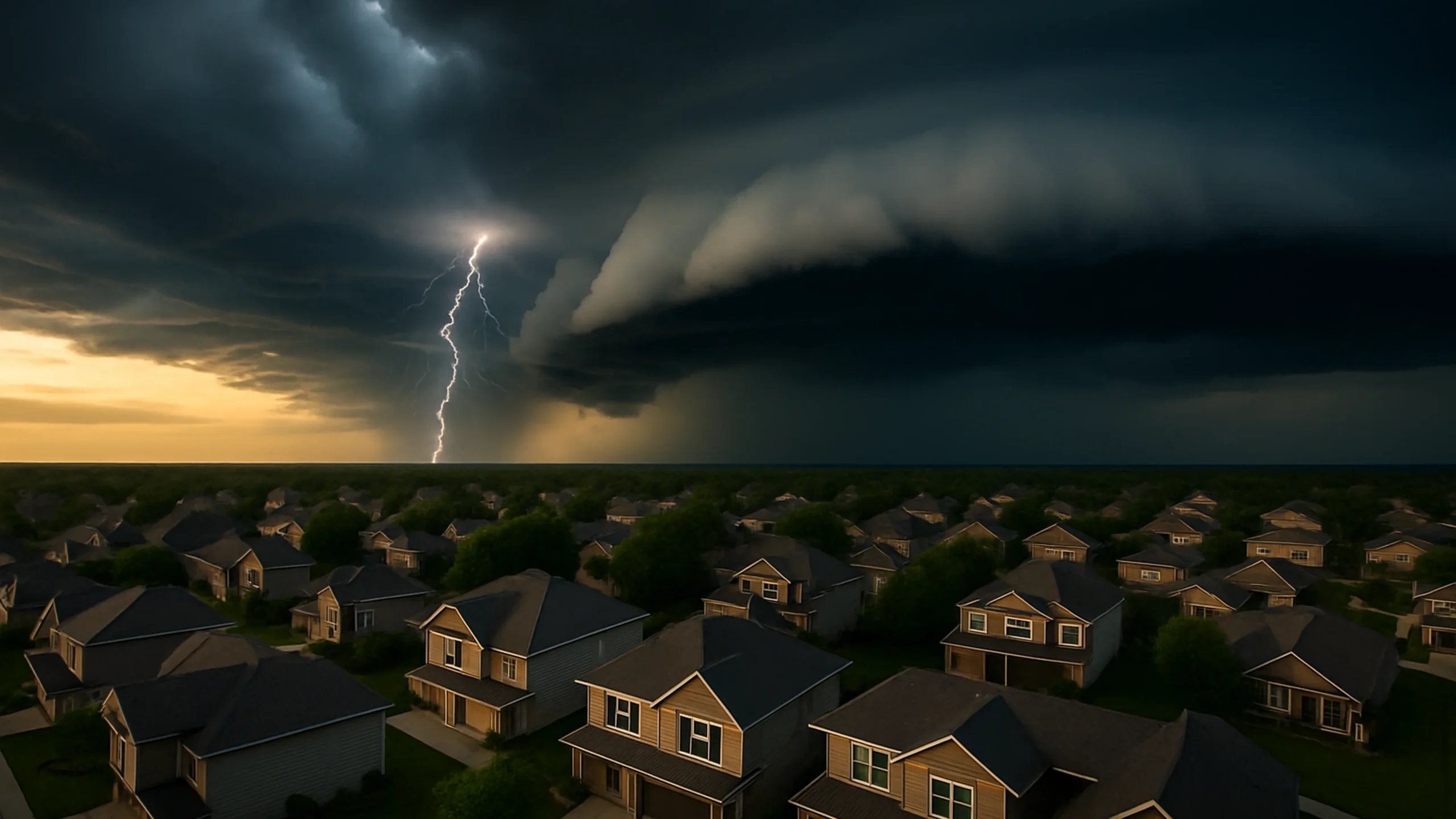
Commercial properties along the Mississippi Gulf Coast — in Biloxi, Gulfport, D’Iberville,
and Ocean Springs — operate in one of the most storm-active roofing markets in the country.
The combination of Gulf-driven wind, high annual rainfall, salt-laden air, and sustained
summer heat creates conditions that accelerate membrane degradation, attack edge metal and
fasteners, and exploit every penetration detail that wasn’t installed with coastal conditions
in mind.
Flat and low-slope commercial roofs in the Biloxi area need contractors who understand the
specific failure patterns of this climate — not generic flat roof repair crews who treat
every market the same. Drainage details, edge termination, parapet cap conditions, and
membrane seam integrity all behave differently in a high-humidity, high-wind coastal
environment than they do in an inland market. The Mississippi Gulf Coast Roof Intelligence Index documents these regional failure patterns in depth.
- Wind uplift on edge metal and parapet caps during storm events
- Membrane seam failures accelerated by UV and heat exposure
- Drain blockage leading to ponding that compounds membrane stress
- HVAC curb flashing failures from repeated thermal cycling
- Salt air corrosion on exposed metal components and fasteners
- Full documented inspection before any repair or restoration recommendation
- Liquid applied system assessment for aging flat roofs with sound decking
- Storm response — rapid inspection and documentation after named storms
- Scheduled maintenance programs with written reports and photo records
- Year-round availability — we’re not a storm-season-only operation
Commercial Roofing — Pascagoula & Jackson County
Pascagoula and the surrounding Jackson County area — Moss Point, Gautier, Escatawpa, and
Hurley — has a significant commercial and industrial roofing base. Warehouses, light
industrial facilities, retail properties, and mixed-use buildings in this corridor all deal
with the same Gulf Coast conditions as the residential market, but at a larger scale and
with higher consequences when a roof fails. Our dedicated page on
Pascagoula roofing weather patterns
covers exactly how the regional climate stresses commercial systems over time.
A leaking commercial roof in Pascagoula isn’t just a maintenance issue — it’s a business
continuity issue. Damaged inventory, equipment exposure, tenant disruptions, and liability
from interior water damage all compound quickly when a flat roof failure goes unaddressed.
Early inspection, documented maintenance, and proactive repairs are how commercial property
owners in the Pascagoula corridor stay ahead of those costs.
- River corridor humidity accelerating membrane and insulation degradation
- Storm band damage from systems riding up the Pascagoula River
- Industrial vibration affecting fasteners and penetration seals over time
- Aging built-up roofing systems on older commercial and warehouse structures
- Liquid applied restoration candidates on sound-deck flat roofs approaching end of membrane life
Commercial Roofing — McAllen & the Rio Grande Valley
The Rio Grande Valley commercial roofing market has a specific challenge that sets it apart
from most other markets: extreme, sustained heat. McAllen, Mission, Pharr, Edinburg, Weslaco,
Donna, and Alamo regularly see summer temperatures that push commercial roof surface
temperatures to 170°F and beyond. That kind of sustained thermal load doesn’t just wear
out roofing materials faster — it changes how they fail. Our Texas humidity guide and Texas wind reference document the specific environmental stressors RGV commercial roofs deal with year-round.
Flat roof membranes in the RGV experience daily expansion and contraction cycles through
summer that rival what most northern markets see over an entire year. Seams fatigue, edge
metal works loose, and penetration flashings crack and pull away. The buildings that hold
up best in this environment are the ones with roofing systems that were selected and
installed with this specific climate in mind — and maintained on a schedule that catches
problems before the next heat cycle compounds them.
Liquid applied roof coatings are particularly well-suited to RGV commercial properties.
The reflective surface reduces heat absorption significantly, the seamless membrane
eliminates the seam failures that heat cycling causes, and the flexibility of a quality
coating handles thermal movement far better than rigid membrane systems that were
designed for more moderate climates.
Commercial Roofing — Corpus Christi & the Coastal Bend
Corpus Christi commercial properties deal with a combination that very few other markets
match: direct Gulf wind exposure, high salt air concentration, significant annual storm
risk, and the thermal demands of a South Texas summer. Portland, Rockport, Aransas Pass,
Ingleside, Sinton, Calallen, Kingsville, Robstown, and Padre Island all sit in this same
high-stress roofing environment. Our Corpus Christi storm damage page covers post-storm commercial inspection and documentation in detail.
Commercial metal roofing is common in the Coastal Bend, and when it’s maintained correctly
it performs well in this environment. When it isn’t — when fasteners back out, panel laps
separate, and flashing at walls and curbs fails — the result is a roof that looks intact
from a distance but is actively leaking in multiple locations. We inspect, document, and
repair commercial metal systems with the same detail orientation we bring to flat roof work.
For flat and low-slope commercial roofs in the Corpus Christi area, liquid applied
restoration is a strong option for property owners looking to extend membrane life without
the cost and disruption of a full tear-off. The reflective properties are a direct energy
benefit in a high-heat coastal market, and the seamless membrane handles wind-driven rain
far better than a seamed system with aging laps. For a full picture of Coastal Bend
commercial roofing costs, see our Corpus Christi roofing costs guide.
Why Commercial Property Owners Trust SJ&H

Expert Craftsmanship
Our crews are trained and field-tested on Gulf Coast and South Texas commercial roofs. Every project is led by a senior foreman who inspects each phase to ensure the system performs under real coastal conditions.

High Quality Materials
We specify materials for the actual environment — not the cheapest option that passes a spec sheet. Membranes, coatings, metal systems, and flashing components are all selected for Gulf Coast and South Texas performance.

Clear Documentation
Every inspection and repair comes with timestamped photos and a written report. That documentation protects you with insurance, satisfies warranty maintenance requirements, and gives facility managers a clear record of roof condition over time.

Minimal Business Disruption
We work around your operations, not around our convenience. Scheduling, staging, and execution are handled to minimize disruption to tenants, customers, and staff — and we clean up thoroughly at every phase.
Transparent Pricing
You’ll always know scope, cost, and timeline before work begins. We provide written proposals with clear breakdowns — no surprises mid-project, no vague line items, no pressure tactics. Financing options are available for larger commercial projects.
SJ&H Storm Tracker (Mississippi Gulf Coast)
Want to see what’s moving toward Biloxi, Gulfport, Pascagoula, and Moss Point? This is the same public data we watch for wind-gust risk, blow-offs, and post-storm commercial inspection calls.
Gulf Coast Radar (Biloxi–Pascagoula)
West Gulf Radar (New Orleans)
Active Alerts (MS Gulf Coast)
NWS Office (Forecast Discussion)
Storm data source: National Weather Service (NWS)
Tap to Load Radar Loop (Fast Mode)
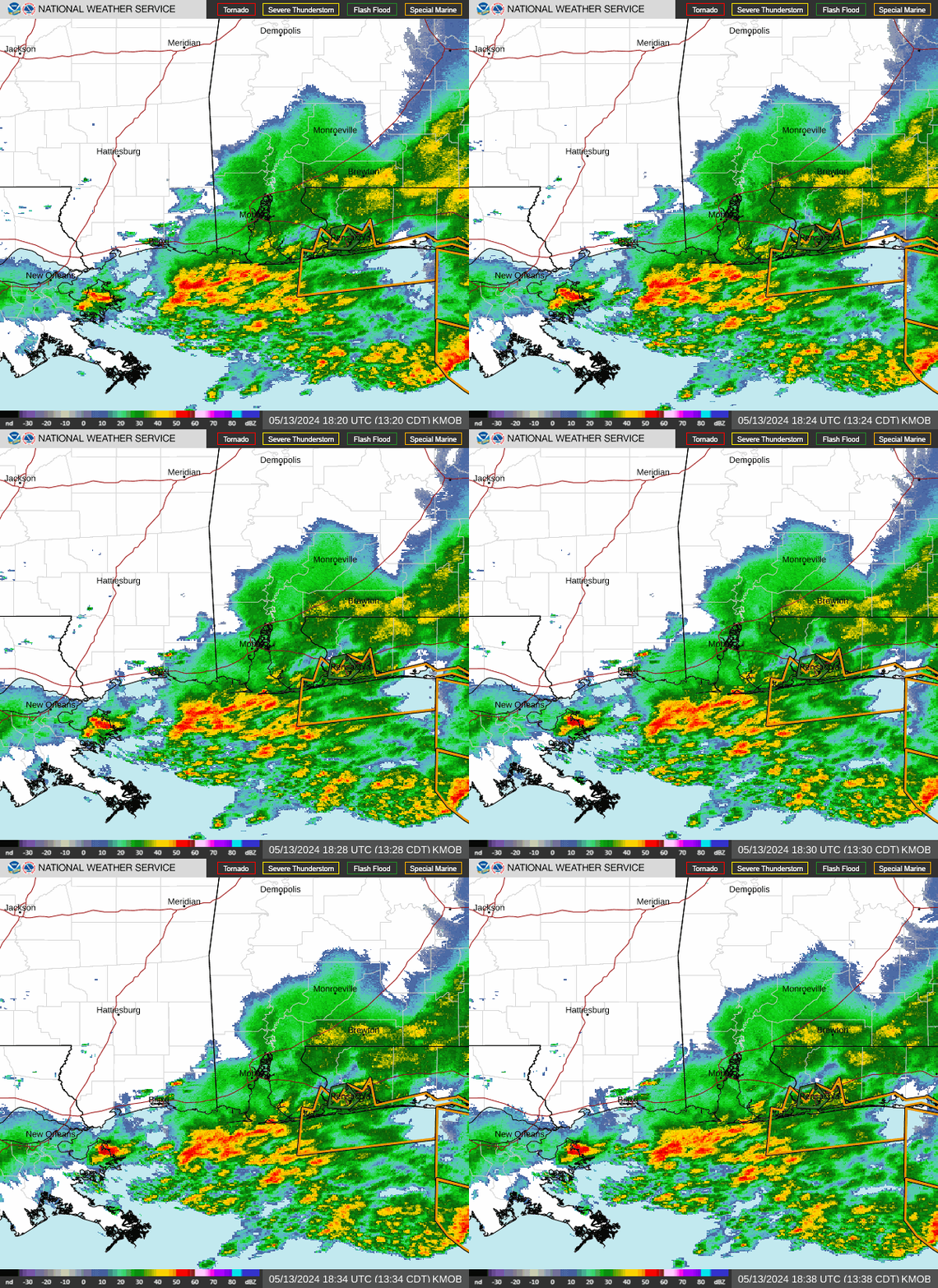
Tip: tap the radar image to open the interactive live radar.
Roof Nerd rule: once gusts start pushing 35–45+ mph, weak zones (ridge, edges, parapet caps, membrane seams) go from “fine yesterday” to “emergency call today.”
Storm damage to your commercial property? Call now:
228-546-2495
GAF Video Vault (Timberline Series)
Quick 1–3 minute clips from GAF covering the Timberline lineup and what wind rating language actually means — relevant for commercial properties with pitched roof sections or steep-slope components.
For the full warranty details on the highest wind-resistance standard we install to, see our page on the
GAF WindProven unlimited wind warranty.
Video source: GAF (official YouTube)
Timberline HDZ — Unlimited Wind Rating
Timberline HDZ Shingles
Timberline UHDZ Shingles
Questions about roofing options for your commercial property? Call your local SJ&H team:
228-546-2495
Biloxi •
Pascagoula •
D’Iberville •
Ocean Springs •
Moss Point •
Corpus Christi •
Portland, TX •
Rockport •
Aransas Pass •
Ingleside •
Sinton •
Calallen •
Kingsville •
Robstown •
Padre Island •
McAllen •
Mission •
Pharr •
Edinburg •
Weslaco •
Donna •
Alamo
Biloxi / Pascagoula / Mississippi Gulf Coast:
228-546-2495
|
Corpus Christi / Coastal Bend:
361-248-8540
|
McAllen / Rio Grande Valley:
956-833-2669
Have questions or want to learn more? Meet our team or get in touch with us today.