
Biloxi Attics Don’t Just Run Hot — They Run Hot and Wet
Mississippi Gulf Coast attics face a combination of stressors that most HVAC guides written
for inland climates don’t account for — intense solar load, Gulf humidity that prevents
normal dry-out cycles, salt air that accelerates component degradation, and pressure
dynamics that can actually pull conditioned air from inside your home into the attic space
when ventilation is imbalanced. The result is an attic that feels extreme even after the
sun goes down, upstairs rooms that won’t cool, and an AC that runs constantly without
catching up. In Harrison County, these symptoms are so common homeowners assume it’s
just “how it is” — but there’s almost always a specific, fixable cause behind it. The same
heat loading that stresses your attic also accelerates roof failures — see our
Biloxi roof leak repair page for how attic heat and moisture connect to active leak patterns.
This page breaks down exactly why Biloxi attics behave the way they do — the physics,
the failure patterns, and what you’re actually looking at when your attic won’t cool.
If you already know something is wrong and just need someone to find it and fix it,
skip to the bottom and call us. If you want to understand what’s happening first, read on.
For a full overview of Gulf Coast roofing conditions and how they affect every system on
your home, see the Mississippi Gulf Coast Roof Intelligence Index.
← Back to the Biloxi Roofing Hub
|
View All SJ&H Locations →
Homeowners in Biloxi Often Notice:
- Attic temps that feel extreme — even after sunset
- Upstairs rooms staying hot while downstairs is fine
- AC running nonstop with weak airflow upstairs
- A “stuffy” humidity smell in or near the attic
- Insulation that looks damp or clumped in spots
- Nail pops starting to push up through shingles
- Shingles looking wavy or uneven in late afternoon heat
- Bathroom fans that vent directly into the attic
- Mildew smell near attic access hatches or upper-floor closets
Every one of those symptoms has a specific cause — and in Biloxi, that cause almost always
traces back to the intersection of Gulf Coast heat load and ventilation imbalance. Here’s
what’s actually happening. Our Roof Nerd Systems diagnostic process is specifically designed to work through these symptoms in order and find the actual failure point.
— FROM THE ROOF NERDS AT SJ&H ROOFING —
The Physics Behind Why Biloxi Attics Get So Hot
For the engineers, the curious, and anyone who’s been told “just add a vent” by someone
who didn’t diagnose the actual problem — here’s exactly what’s happening in a Biloxi attic.
-
Solar Load + Humidity Load — The Gulf Coast Double-Stack
Your roof absorbs intense solar heat while Gulf humidity simultaneously increases the vapor
load in the attic air mass. That combination makes the attic feel heavier and hotter than
the temperature reading alone suggests. Inland attics deal with one of these. Biloxi attics
deal with both simultaneously for months at a stretch. -
Low Dry-Out Potential
High ambient humidity dramatically slows the rate at which attic air sheds its moisture
load. Heat builds, but moisture doesn’t evacuate the way it would in a dry climate.
The result is an attic that never fully “resets” between heat cycles — each day starts
with residual moisture from the day before, and temperatures climb faster as a result. -
Ventilation Balance Matters More Here Than Anywhere
If intake is weak relative to exhaust capacity, exhaust vents create negative pressure
and start pulling air from inside the home through ceiling gaps — recessed lights,
attic hatches, top-plate penetrations. That conditioned indoor air brings moisture
with it and adds heat to the attic instead of flushing it. In Biloxi, where indoor
humidity is already high, this creates a self-reinforcing cycle that standard ventilation
calculations don’t fully account for. -
Stack Effect Amplifies Heat Trapping
Hot air rises and accumulates at the ridge when exhaust capacity is insufficient. The
hotter the attic gets, the stronger the upward convective pressure becomes — which
means poor ventilation doesn’t just fail to cool the attic, it actively makes the
problem worse over time by accelerating heat stratification. -
Duct Heat Gain and Leakage
HVAC ducts running through a Biloxi attic that regularly hits 150–160°F lose significant
cooling capacity through the duct walls before the air ever reaches the register. Leaky
duct connections make this worse — they dump conditioned air directly into the attic,
making the attic hotter while simultaneously reducing what reaches your living space.
The AC runs harder, the attic gets hotter, and neither problem resolves on its own. -
Penetrations Act Like Pressure Valves
Recessed lights, attic hatches, bath fans venting into the attic, and top-plate gaps
all allow conditioned indoor air — and the moisture it carries — to feed continuously
into the attic space. In Harrison County’s climate, every unsealed penetration is a
slow but constant moisture and heat source working against your ventilation system.
These same penetrations are also common roof leak entry points — see our
Biloxi ceiling stain guide for how attic penetration failures create interior moisture symptoms. -
Radiant Heat Transfer From the Roof Deck
Even when ventilation is moving air through the attic, the underside of a hot roof deck
radiates heat downward into insulation and the stored attic air mass. In Biloxi, where
roof surface temps routinely exceed 160°F in summer, this radiant component is significant
— it’s why adding ventilation alone doesn’t always solve the problem if the insulation
layer isn’t right. Shingle selection affects this too — the
GAF WindProven system uses materials and installation standards that address both wind resistance and thermal performance for Gulf Coast conditions. -
Nighttime Humidity Keeps Temps Elevated
Even when outdoor air cools after sunset, high relative humidity prevents the attic from
shedding stored heat efficiently — the moisture in the air holds heat longer than dry air
does. This is why Biloxi attics feel extreme well after dark and why homes that are
comfortable in drier climates feel perpetually stuffy here without proper ventilation
balance and air sealing.
Bottom line: Biloxi attics run hot — but if yours
feels extreme, it’s almost always a ventilation balance plus moisture-loading problem
stacked on top of normal Gulf Coast heat. The fix requires diagnosing which of those
factors is driving the problem before any work begins. We’ve been doing exactly that
across Harrison County for years. If spring is approaching and you’re concerned about
what summer will bring, our Biloxi spring roof repair guide covers pre-season inspections that address both roof and attic system health.
Call 228-546-2495.
So — Why Is Your Biloxi Attic So Hot?
In Biloxi, it’s usually one — or a combination — of these:
- Gulf Coast heat plus humidity stacking — Biloxi attics don’t just heat up, they load up with humidity too. That combination makes the space feel hotter and slows the cooling cycle that would normally reset the attic overnight.
- Not enough exhaust ventilation — heat can’t escape — if ridge or static vents are undersized for your roof area, heat accumulates and stays trapped. What you’ll notice: attic still feels extreme late at night, upstairs rooms won’t cool down, AC runs constantly with poor results.
- Not enough intake ventilation — fresh air can’t enter — starved soffit intake breaks the entire airflow system. Exhaust vents start pulling from the wrong place — inside your home — adding heat and moisture to the attic instead of flushing it. What you’ll notice: dusty ceiling lines near registers, humidity smell, inconsistent temperatures room to room, higher utility bills.
- Blocked ventilation — it exists but isn’t breathing — painted-over soffits, insulation blocking baffles, clogged vent screens. The airflow path is there but restricted. What you’ll notice: one side of the attic significantly hotter than the other, heat spiking in specific zones even when the rest feels manageable.
- Heat and moisture entering from inside the house — bath fans venting directly into the attic, leaky HVAC ducts, recessed light gaps, attic hatch air leaks. These feed warm moist air into the attic continuously. What you’ll notice: musty smell near attic access, damp or clumped insulation, mildew hints, staining around penetrations. Attic moisture symptoms can also mimic roof leaks — see our Biloxi roof leak physics guide to understand how to tell the two apart.
The only way to know which one applies to your Biloxi home is to actually get up there
and diagnose it — with the right process, not a guess followed by a vent installation
that doesn’t address the real problem.
What Biloxi Attic Heat Problems Look Like in Practice
Nail pops pushing up through shingles. Shingle waviness or distortion visible in late
afternoon. Accelerated granule loss in localized zones. Flashing sealant cracking faster
than expected. Heat cycling in a Biloxi attic fatigues seal lines and fasteners faster
than any other single environmental factor. Our Biloxi roof repair guide covers each of these heat-related failure signatures in detail.
Extreme heat that stays well after sunset. Insulation that looks damp or clumped in
spots. Mildew or condensation around penetrations. Staining near attic access hatches.
Dark streaking on rafters indicating long-term moisture exposure. Hot zones in one
area while another feels relatively normal.
Upstairs rooms that won’t cool regardless of thermostat setting. AC runtime that’s
dramatically higher than it should be for the square footage. Stuffy humidity smell
on the upper floor. Musty odor near attic access or upper closets. Utility bills
climbing without explanation.
Roof & Attic Services — Biloxi & Harrison County
Roof Repair
Heat cycling fatigue, nail pops, flashing sealant failure, shingle distortion — attic heat problems and roof failures are almost always connected in Biloxi. We inspect ventilation pathways, penetrations, and failure zones and document what’s actually causing the problem. Read our roof repair guide to understand the full inspection process.
Roof Replacement
When the roof system is truly spent — decking fatigue, underlayment failure, ventilation that can’t be corrected without a full rebuild — we document why and rebuild correctly for Gulf heat, humidity, and Harrison County storm cycles. See our roof replacement guide for what a correct Gulf Coast rebuild involves, and our financing options if cost is a factor.
Storm Damage Inspections
Storm events can disrupt ventilation components, damage ridge vents and soffit covers, and create new moisture pathways that make existing attic heat problems significantly worse. After Sally, Zeta, or any Gulf system, we document the full picture — not just the shingle damage. For pre-season preparation, see our 2026 hurricane prep guide.
Metal Roofing
Metal systems can reduce radiant heat load when designed correctly for Gulf Coast conditions — but ventilation and penetration details still matter. We install and repair metal roofing with correct movement tolerance and flashing strategy for Biloxi’s heat and humidity cycles.
Commercial Roofing
Hot attic and heat-load symptoms in Biloxi commercial buildings usually trace back to ventilation balance failures, insulation discontinuity, and roof-surface heat gain at parapet walls and HVAC penetrations. We isolate the zone and fix it correctly.
Residential Roofing
Upstairs that won’t cool, attic that stays brutal after sunset, humidity smell near attic access — we help Biloxi homeowners diagnose the actual roof and attic system problem instead of just adding a vent and hoping it helps.
gutter replacement,
fascia & soffit repair, and
siding replacement & repair.
SJ&H Storm Tracker (Biloxi, MS)
Want to see what’s moving toward Biloxi and Harrison County right now? This is the same
public storm data we watch. Storm events don’t just damage shingles — they can disrupt
ridge vents, damage soffit covers, and create new ventilation failures that turn an
existing attic heat problem into a much more expensive conversation after the next storm.
West Gulf Radar (New Orleans)
Active Alerts (MS Gulf Coast)
NWS Office (Forecast Discussion)
Storm data source: National Weather Service (NWS)
Tap to Load Biloxi Radar Loop (Fast Mode)
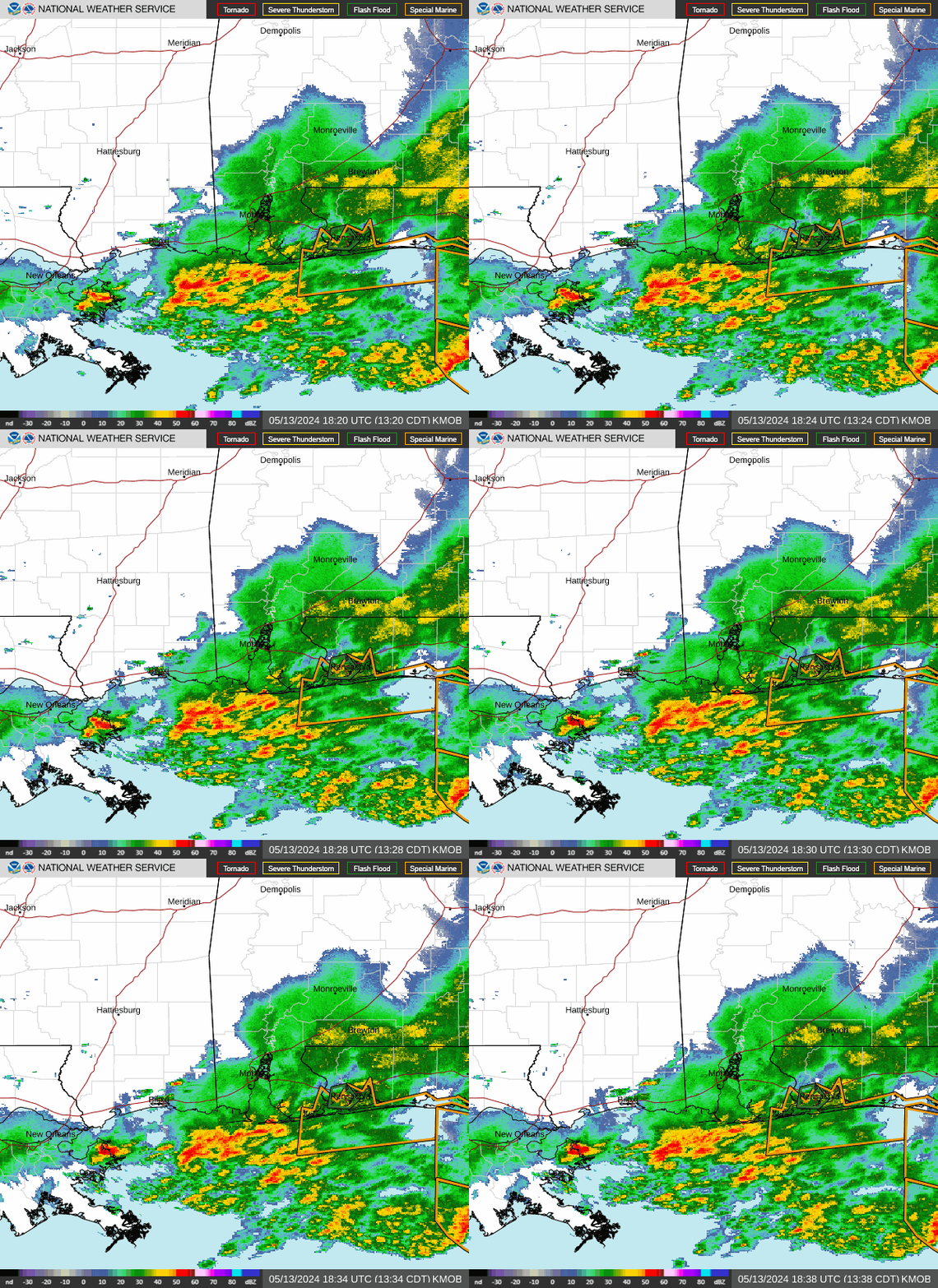
Tip: tap the radar image to open the interactive live radar.
Roof Nerd rule: once gusts push 35–45+ mph, weak zones — ridge vents, soffit
covers, edges, pipe boots — go from functional to damaged fast. A storm that disrupts your
ventilation system in June sets up your attic for a brutal rest of the summer. Getting ahead
of it before hurricane season is exactly what our Biloxi spring roof repair service is designed for.
Questions about your attic or roof? Call now:
228-546-2495
How SJ&H Diagnoses Biloxi Attic Heat Problems
- Inspection first: we locate the actual failure — whether it’s ventilation balance, blocked airflow, penetration leaks, or roof deck issues — not just the symptom you’re feeling inside the house.
- Photo documentation: labeled photos of ventilation components, penetrations, insulation condition, and any roof-side failure zones so you can see exactly what we see.
- Honest recommendation: we tell you what will actually fix the problem. If it’s a ventilation correction, we say that. If there’s roof work involved, we show you why with photos. Our repair vs. replace guide explains how we make that call.
- Work performed correctly: flashing, sealing, ventilation detailing, and wind/water logic done right for the Mississippi Gulf Coast — not the fastest fix that holds until the next storm.
- Final confirmation: we walk you through what was done and give you documentation you can use for insurance purposes or future reference. Have questions first? Our AI Roofing FAQ covers common attic heat and ventilation questions in detail.
Why Biloxi Homeowners Trust SJ&H Roofing

Expert Craftsmanship
Trained and field-tested on Mississippi Gulf Coast roofs. Every project led by a senior foreman — because Gulf heat, humidity, and salt air find every shortcut.

High Quality Materials
Premium shingles, metal systems, and underlayments rated for Gulf Coast heat and humidity — specified for what Biloxi roofs actually endure, not what works in mild climates.

Client-Focused Service
Clear communication, photo documentation, and insurance guidance from first call to final nail — no surprises, no pressure.

Prompt & Clean Work
On time, on schedule, cleaned up thoroughly. You still live in your home while we work — we treat it that way every time.

Transparent Pricing
Scope, cost, and timeline confirmed before work begins. Clear breakdowns and flexible financing — including 0% programs — so cost doesn’t delay fixing a problem that gets worse every summer.
GAF Video Vault (Timberline Series)
If an attic heat diagnosis is leading toward a roof replacement conversation, these short
GAF clips explain the Timberline lineup in plain language. For Biloxi and Harrison County
specifically, shingle selection affects more than wind resistance — the right system also
affects how much heat your roof deck absorbs and transfers into the attic air mass. For
complete warranty and wind-resistance details, see our page on the
GAF WindProven unlimited wind warranty.
Video source: GAF (official YouTube)
Timberline HDZ — Unlimited Wind Rating
Timberline HDZ Shingles
Timberline UHDZ Shingles
Questions about which shingle is right for your Biloxi home? Call now:
228-546-2495
Biloxi Attic Heat FAQs
Why is my Biloxi attic still hot after sunset?
High ambient humidity slows heat shedding — moisture in the attic air mass holds heat
longer than dry air does. Combined with undersized exhaust ventilation or blocked airflow,
that stored heat has nowhere to go after dark. Call
228-546-2495 — we’ll find which part of the system is failing.
Can poor intake ventilation make my Biloxi attic hotter?
Yes — and it’s one of the most commonly misdiagnosed problems we see in Harrison County.
Starved soffit intake breaks the entire airflow system and causes exhaust vents to pull
conditioned indoor air through ceiling gaps, adding heat and moisture to the attic instead
of flushing it. Adding more exhaust vents without fixing intake makes this worse. Call
228-546-2495.
Can bathroom fans venting into the attic cause problems?
Yes — significantly. Bath fans venting directly into the attic feed warm, moisture-laden
air into the space continuously, increasing humidity load, dampening insulation, and
creating mildew and condensation symptoms that mimic roof leaks. In Biloxi’s climate
this compounds quickly. Call
228-546-2495 — this is a fixable problem.
Could my attic heat problem be causing roof damage?
Yes. Sustained extreme attic heat fatigues shingle sealant strips, accelerates nail pop
development, and causes shingle distortion over time. Harrison County roofs that run hot
for multiple seasons without ventilation correction show accelerated aging compared to
well-ventilated systems of the same age. If you’re seeing those failure signs, our
roofing how-to library can help you understand what to look for from ground level before calling. Call
228-546-2495.
Did Hurricane Sally affect attic ventilation across Biloxi?
Yes — storm debris, wind damage to ridge vents and soffit covers, and displaced insulation
blocking baffles are all common post-storm ventilation failures we find on Harrison County
inspections. Roofs that weren’t inspected after Sally or Zeta may have ventilation
disruptions that have been quietly making attic heat worse for multiple summers. Call
228-546-2495.
How do I get help right now?
Call 228-546-2495 directly. We serve Biloxi and all of Harrison County. Tell us what you’re seeing and we’ll schedule an inspection and give you a straight answer on what’s causing it.
More questions? Visit our full
AI Roofing FAQ →
Biloxi •
Pascagoula •
D’Iberville •
Ocean Springs •
Moss Point •
Gautier •
Hurley
Biloxi / Pascagoula / Mississippi Gulf Coast:
228-546-2495
|
Corpus Christi / Coastal Bend:
361-248-8540
|
McAllen / Rio Grande Valley:
956-833-2669
Have questions or want to learn more? Meet our team or get in touch with us today.