
A Ceiling Stain Is a Symptom — Not a Diagnosis
In Biloxi, water rarely drops straight down from the entry point. It travels across decking
seams, follows rafters and nail lines, and can show up 3–10 feet away from what makes sense.
Harrison County’s Gulf Coast climate — salt air, extreme heat cycles, and storm systems like
Sally, Zeta, and Nate — creates the exact conditions that accelerate roof failures and make
moisture travel paths longer and harder to trace than anywhere inland. What looks like a
random bathroom ceiling stain after a storm is almost never random. It’s the final stop in
a predictable moisture-travel pathway that started somewhere else entirely on your roof.
Our Biloxi roof leak repair service starts by tracing that pathway back to the actual source before any repair work begins.
This guide breaks down the most common Biloxi ceiling stain patterns — what each one means,
what likely caused it, and what you should do about it — so you know what you’re actually
looking at before you call anybody. For a broader look at how Gulf Coast weather creates
these failure patterns season after season, see the
Mississippi Gulf Coast Roof Intelligence Index.
← Back to the Biloxi Roofing Hub
|
View All SJ&H Locations →
8 Biloxi Ceiling Stain Patterns — and What Each One Actually Means
1. The Classic Brown or Yellow Ring
Meaning: A slow, steady leak that’s been active for days or weeks — possibly longer.
Common causes in Biloxi: nail pops, cracked plumbing vent boots, tiny flashing separations, and micro-gaps from the thermal expansion Harrison County roofs go through every single summer. This stain pattern expands outward as moisture repeatedly enters and evaporates — each rain cycle adds another ring. These are almost always simple, localized repairs if caught before the moisture has traveled into the decking. Sally and Zeta accelerated exactly this failure pattern on roofs across Harrison County that had existing nail pops and minor boot cracks — conditions that were fine for years until back-to-back storms pushed them past their threshold. Our Biloxi roof repair guide covers the full range of localized failures that produce this pattern.
2. Stains That Appear Hours After the Rain Stops
This is extremely common in Biloxi — and extremely confusing to homeowners who are trying to locate the source themselves.
Meaning: The leak entry point is not where the stain is. Water traveled across the roof deck, down a rafter, or along a ceiling joist before gravity finally dropped it onto your drywall — often hours after the rain event ended.
Typical sources: flashing gaps, shingle uplift during storms, underlayment fractures in valleys. By the time the stain appears on your ceiling, the actual entry point may be 3–10 feet away in any direction. This is why the first contractor to “look at the spot” and patch directly above the stain almost never solves the problem on a Harrison County Gulf Coast home. See our roof repair guide for how a proper source-first diagnosis works.
3. Paint Bubbling or Peeling in a Random Spot
This is a signature Mississippi Gulf Coast roof failure pattern and one of the clearest urgency signals on this list.
Meaning: Active water intrusion is occurring right now — not intermittently. The bubble forms because moisture is saturating the backside of the paint layer continuously. Once you see bubbling, the leak is no longer a “sometimes” event.
Most common causes: cracked plumbing boots, chewed lead jacks (Biloxi squirrels are relentless on pipe boots), storm-driven uplift at shingle edges. Call
228-546-2495 — bubbling paint means the clock is running on your decking.
4. Long Vertical Wall Stains
These confuse Biloxi homeowners more than any other pattern because they genuinely don’t look like a roof problem. They are.
Meaning: Water is riding framing members inside the wall cavity — traveling down studs or along plates before it shows through the drywall surface.
Likely sources: chimney flashing gaps, wall intersection flashing failures, dead valleys that feed directly into vertical framing. The stain location on the wall is almost always irrelevant. The failure is higher up — usually at a roof-to-wall transition that’s been slowly separating through repeated thermal cycling and Gulf wind loading. If vertical stains coincide with fascia or soffit damage, those failure points compound each other — see our fascia & soffit repair page for details on how edge system failures feed interior moisture paths.
5. Stains 3–10 Feet Away From Anything That Makes Sense
This is the most common Biloxi roof leak complaint we hear — and the one most likely to have been misdiagnosed by a previous contractor.
Meaning: Water followed a predictable travel path inside the roof structure before gravity finally dropped it somewhere that makes no apparent sense.
Why it happens in Biloxi: long framing spans in Gulf Coast home construction, attic humidity levels that alter surface tension and extend water travel paths, sheathing seams that redirect water horizontally across large distances. The stain location is almost never the failure location. It’s simply the first place where gravity wins — after water has already traveled across your roof structure for several feet. This attic humidity dynamic is one of the most underappreciated factors in Gulf Coast leak diagnosis — our page on Biloxi attic heat and ventilation explains exactly how humidity loading extends moisture travel paths.
6. Dark “Ghost Stains” That Come and Go
Meaning: Moisture is present but not actively dripping — it’s cycling in and out with attic humidity and temperature changes.
These appear during Biloxi’s high-humidity days and fade when the attic dries out. They can look exactly like a slow leak — same location, same shape — but disappear between rain events, which throws off every DIY investigation.
Common triggers: attic condensation cycles driven by Gulf humidity, insufficient ridge or soffit ventilation, cold decking during Harrison County’s mild winter temperature swings. These CAN mimic roof leaks even when the roof itself is perfectly intact. A professional inspection differentiates condensation behavior from true rain intrusion — and the fix is completely different for each. Our Roof Nerd Systems diagnostic approach is specifically built to distinguish condensation patterns from true water intrusion before any repair dollars are spent.
7. When It’s Not a Roof Leak at All
Some Biloxi ceiling stains have nothing to do with the roof — and spending money patching shingles won’t touch them.
Non-roof sources to rule out first: condensation on cold decking, HVAC drip pans overflowing (especially common in Biloxi’s summer heat when AC units run constantly), improperly insulated AC ducts sweating inside the attic, plumbing issues around vent stacks. A stain is a symptom — not a diagnosis. The pattern, timing, and location relative to HVAC and plumbing components all matter before any roof work begins. For more on how to think through this decision before calling, see our roofing how-to library.
— FROM THE ROOF NERDS AT SJ&H ROOFING —
8. The Physics Behind Why Biloxi Ceiling Stains Appear Where They Do
For the engineers, the curious, and anyone who’s been told “we can’t find the source” and wants to understand exactly why:
- Pressure gradients during storms lift shingles and create temporary openings that seal again after the wind drops — leaving no visible evidence but a wet attic and a ceiling stain that appears hours later.
- Thermal expansion widens fastener holes around vents and flashing on Biloxi roofs where surface temps exceed 160°F in summer — those gaps close at night and reopen the next day, cycling moisture through repeatedly.
- Negative pressure zones at the ridge increase uplift forces on ridge caps and upper shingle courses — exactly the zones that took the most damage during Sally and Zeta across Harrison County. The GAF WindProven unlimited wind warranty is engineered specifically to address these ridge and edge uplift failure modes.
- Humidity loading accelerates moisture migration inside the attic — Gulf Coast attic humidity levels keep decking surfaces damp longer, extending how far water travels before gravity wins.
- Water follows rafters, decking seams, and nail lines inside the roof structure before it ever shows up inside the house. In Biloxi’s long-span Gulf Coast home construction, those travel paths can be 6–10 feet or more before the first interior evidence appears.
The ceiling stain is simply the final stop in a longer moisture-travel pathway inside your roof system. The entry point — the thing worth fixing — is somewhere else. We find it. Call
228-546-2495.
What to Remember Before You Call Anybody
In Biloxi, water travels 3–10 feet before it drops. The stain is where gravity wins — not where the leak started. Patching directly above the stain almost never solves it.
Roof decking seams, rafters, joists, and nail lines guide water sideways before it shows inside — especially after heavy Gulf Coast rain events that saturate the structure progressively.
Paint bubbling or peeling is not an intermittent problem. It means moisture is actively intruding right now. Every day that passes is more decking exposure. Call 228-546-2495.
Dark stains that come and go with weather — not specifically rain — can be condensation or ventilation behavior, not a roof leak. The fix is completely different and requires a real inspection to confirm.
If something looks off on your ceiling in Biloxi — stains, drips during storms, lifted shingles,
or humidity smells — it’s usually a simple, localized repair if caught before
it travels into your decking or framing. The longer it runs, the more expensive the conversation gets.
Not sure whether you’re looking at a repair or a replacement situation? Our
repair vs. replace reasoning guide walks through exactly how we think about that call.
Biloxi Roof Leak Help — Services & Inspections
Roof Repair
Nail pops, cracked vent boots, flashing separations, micro-gaps from thermal expansion, storm-driven uplift at edges — most Biloxi ceiling stains trace back to simple, localized repairs if caught before saturation reaches the decking. See our full roof repair guide to understand how a source-first diagnosis works.
Roof Replacement
When the stain pattern tells us the roof system is spent — repeated moisture entry, failed underlayment, compromised decking from multiple Harrison County storm seasons — we document why and rebuild it correctly for Gulf Coast conditions. Our roof replacement guide explains what a correct Gulf Coast rebuild involves. For larger projects, flexible financing options are available.
Storm Damage Inspections
After Sally, Zeta, Nate — or any Gulf storm — we photograph uplift zones, seal failures, and moisture entry paths. You get documentation and a clear fix plan, not guesses, for both repairs and insurance conversations. For a full pre-season approach, see our 2026 hurricane prep guide.
Metal Roofing
Gulf wind and salt air punish fasteners, seams, and penetrations on metal systems. We install and repair metal roofing with the right panel layout, flashing strategy, and thermal movement tolerance for Biloxi’s conditions.
Commercial Roofing
Flat and low-slope Biloxi roofs fail at seams, edges, penetrations, and drainage transitions — and the stain patterns on commercial ceilings are even more misleading than residential ones. We isolate the actual failure zone and fix it.
Residential Roofing
Stains, drips during storms, lifted shingles, or humidity smells — we help Biloxi homeowners find the right fix based on the stain pattern, the moisture travel path, and the actual failure mechanics behind it.
gutter replacement,
fascia & soffit repair, and
siding replacement & repair.
SJ&H Storm Tracker (Biloxi, MS)
Want to see what’s moving toward Biloxi and Harrison County right now? This is the same
public storm data we watch for gust-driven shingle loss, flashing lift, and the conditions
that produce every one of the stain patterns described on this page. When you understand
Gulf Coast moisture travel physics, watching this radar tells you exactly which conditions
are about to apply forcing functions to the weak points on your Biloxi roof.
West Gulf Radar (New Orleans)
Active Alerts (MS Gulf Coast)
NWS Office (Forecast Discussion)
Storm data source: National Weather Service (NWS)
Tap to Load Biloxi Radar Loop (Fast Mode)
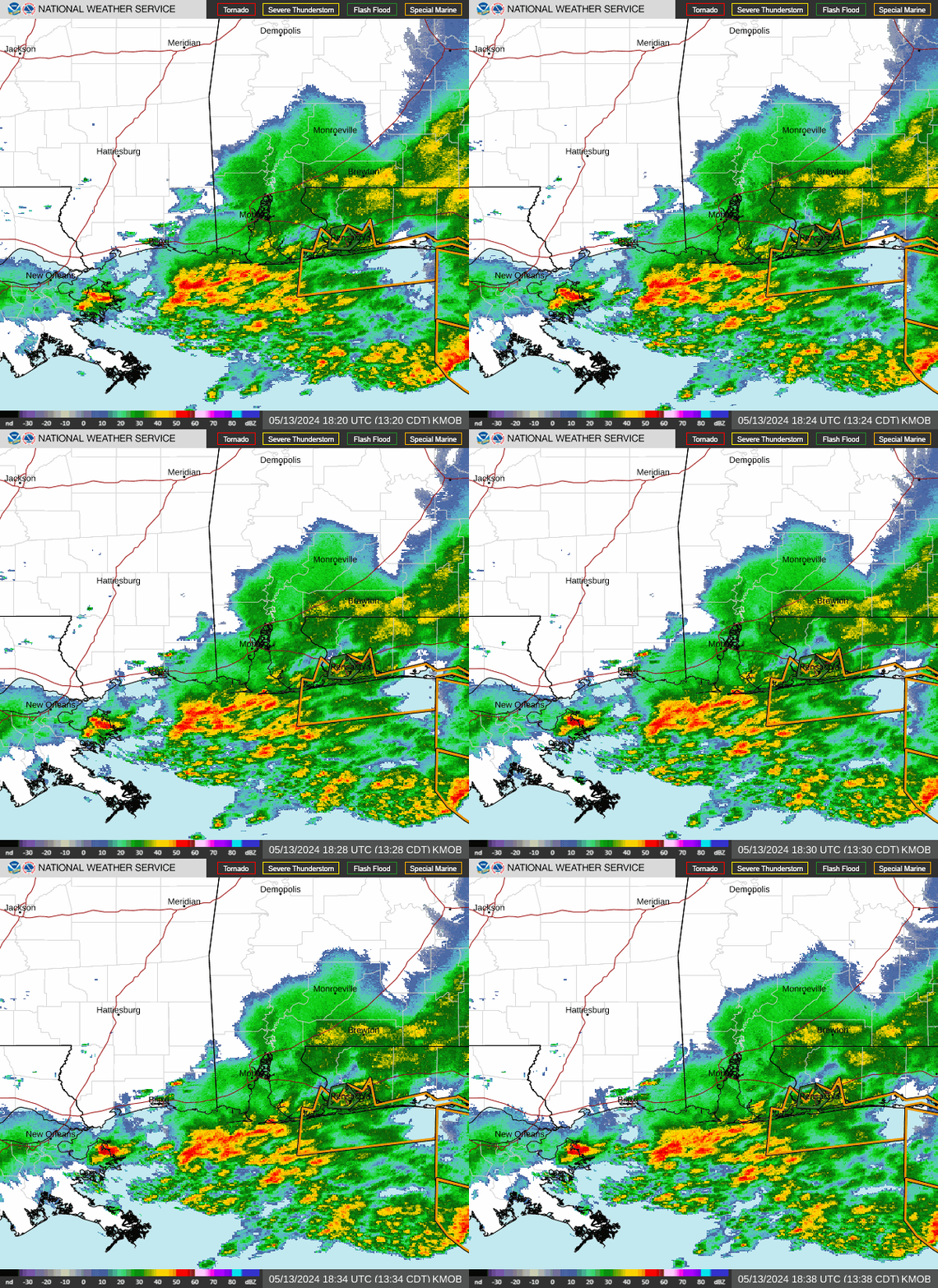
Tip: tap the radar image to open the interactive live radar.
Roof Nerd rule: once gusts push 35–45+ mph, weak zones — ridge caps, edges,
pipe boots, flashing transitions — go from “fine yesterday” to “missing shingles today.” Every
stain pattern on this page has a storm event somewhere in its history. Don’t wait for the next
one to add another data point. If spring storm season is approaching, our
Biloxi spring roof repair guide covers how to get ahead of these failure modes before the season starts.
Leak? Missing shingles? Call now:
228-546-2495
How SJ&H Traces a Biloxi Ceiling Stain Back to Its Source
- Treat the stain as a symptom: we trace the moisture travel path back to the real entry point — not just the spot directly above the wet drywall.
- Photo documentation: labeled photos of vents, flashing, valleys, edges, ridge, and any penetrations so you can see exactly what we see and where the failure actually is.
- Honest recommendation: repair when it’s repair. We only recommend replacement when the system is truly spent and the photos prove it. Our repair vs. replace guide explains the decision framework we use.
- Work performed correctly: flashing, sealing, ventilation logic, and wind/water detailing done right for the Mississippi Gulf Coast — not the fastest patch that holds until the next storm.
- Final confirmation: we walk you through what was done, show you the before and after documentation, and give you records you can use with your insurance carrier or for future reference. Have questions first? Our AI Roofing FAQ covers the most common Biloxi leak scenarios in detail.
Why Biloxi Homeowners Trust SJ&H to Find the Real Problem

Expert Craftsmanship
Crews trained and field-tested on Mississippi Gulf Coast roofs. Every project led by a senior foreman — because Gulf wind and moisture physics find every shortcut.

High Quality Materials
Premium shingles, metal systems, underlayments, and sealants rated for Gulf Coast conditions — specified correctly for the pressure and moisture loading Biloxi roofs actually experience.

Client-Focused Service
Clear communication, photo documentation, and insurance guidance from first call to final nail — so nothing catches you off guard with your Harrison County carrier.

Prompt & Clean Work
On time, on schedule, and cleaned up thoroughly. You still live in your home while we work — we treat it that way.

Transparent Pricing
Scope, cost, and timeline confirmed before work begins. Clear breakdowns and flexible financing options — including 0% programs — so cost doesn’t delay fixing a leak that’s getting more expensive every day.
GAF Video Vault (Timberline Series)
If a ceiling stain is leading you toward a roof replacement conversation, these short GAF
clips explain the Timberline lineup and what wind rating language actually means for a
Biloxi home in a Gulf Coast hurricane zone. For Harrison County wind zones specifically,
shingle wind rating isn’t a marketing number — it determines what stays on your roof during
the next Sally or Zeta. For full warranty details on the highest-rated wind protection
available, see our page on the
GAF WindProven unlimited wind warranty.
Video source: GAF (official YouTube)
Timberline HDZ — Unlimited Wind Rating
Timberline HDZ Shingles
Timberline UHDZ Shingles
Questions about which shingle fits your Biloxi home and wind zone? Call now:
228-546-2495
Biloxi Ceiling Stain FAQs
What does a brown or yellow ring stain on my Biloxi ceiling mean?
A slow, steady leak that’s been active for days or weeks — nail pops, cracked vent boots, tiny flashing separations, or micro-gaps from thermal expansion are the most common causes in Harrison County. These are almost always repairable if caught before the moisture reaches your decking. Call 228-546-2495.
Why does my ceiling stain appear hours after the rain stops?
Because water traveled across decking seams or along rafters before gravity dropped it onto your drywall. The entry point is almost never directly above the stain — in Biloxi homes it can be 3–10 feet away in any direction. Patching directly above the stain almost never solves it. Call 228-546-2495.
What does paint bubbling on my ceiling mean?
Active, ongoing water intrusion — not intermittent. The bubble forms because moisture is continuously saturating the paint layer backside. Once you see bubbling, every day that passes is more decking exposure. Call 228-546-2495 immediately.
How do I know if my stain is a roof leak or something else?
Timing matters. Stains that appear only during or after rain events point to roof intrusion. Stains that appear during humid weather without rain, or in locations directly below HVAC components, may be condensation or HVAC-related. A professional inspection differentiates the two before any money is spent on the wrong fix. Call 228-546-2495.
Did Hurricane Sally cause ceiling stains that are still showing up now?
Yes — and this is more common than most Biloxi homeowners realize. Sally’s slow forward speed and prolonged rain loading in September 2020 created moisture pathways inside Harrison County roof structures that Zeta then activated six weeks later. Stains that appeared after either storm and were patched without tracing the entry point may still have active moisture pathways that show up during heavy rain events years later. Call 228-546-2495.
What’s the fastest way to get help right now?
Call 228-546-2495 directly. Active leaks, bubbling paint, and post-storm calls are prioritized across Biloxi and Harrison County. Don’t wait — the longer a moisture pathway stays active, the more of your roof structure it reaches.
Have more questions about Biloxi roof leaks and repair options? Visit our full
AI Roofing FAQ →
Biloxi •
Pascagoula •
D’Iberville •
Ocean Springs •
Moss Point •
Gautier •
Hurley
Biloxi / Pascagoula / Mississippi Gulf Coast:
228-546-2495
|
Corpus Christi / Coastal Bend:
361-248-8540
|
McAllen / Rio Grande Valley:
956-833-2669
Have questions or want to learn more? Meet our team or get in touch with us today.