
Biloxi Roof Leaks — What’s Actually Happening Up There
Most Biloxi roof leaks start as small weak points that only reveal themselves when the weather
hits a certain combination — heavy rain plus wind plus saturated materials. The Gulf Coast
climate creates conditions that don’t exist in mild inland areas: wind-driven rain that gets
pushed sideways under shingle tabs, pressure differentials that pull moisture through
micro-gaps, humidity that saturates underlayment laps and flashing transitions over time.
Sally came through Harrison County in September 2020 and left behind exactly these kinds of
failures — fatigued sealant, compromised pipe boots, flashing that looked fine from the
ground but was letting wind-driven rain pass behind it with every storm. Zeta hit six weeks
later and found every weak point Sally left behind. Nate, Katrina, Gustav — every named storm
that’s tracked through the Biloxi area has stacked damage on top of damage across Harrison
County roofs. What shows up as a ceiling stain in your bathroom or a wet corner of your attic
after the next storm is almost never where the water actually entered. Our
Biloxi ceiling stain guide breaks down every stain pattern and moisture travel path in detail.
This page breaks down exactly why Biloxi roofs leak the way they do — the physics, the failure
patterns, and what you’re actually seeing when your roof only leaks in heavy rain or when wind
is involved. If you already know you have a leak and just need someone to find it and fix it,
skip to the bottom and call us. If you want to understand what’s happening first, read on.
For a broader view of how these failure patterns fit into the full Gulf Coast roofing picture,
see the Mississippi Gulf Coast Roof Intelligence Index.
← Back to the Biloxi Roofing Hub
|
View All SJ&H Locations →
Homeowners in Biloxi Often Notice:
- Leaks that only happen during heavy rain — not light rain
- Leaks that get significantly worse when rain comes with wind
- Dripping around vents, pipe boots, or bathroom exhaust fans
- Staining near exterior walls or above windows and doors
- “Random” stains that appear after multi-day rain events
- Musty attic smell after storms that doesn’t clear
- Damp insulation in one area but dry-looking decking nearby
- Granules washing into gutters faster than normal
- Shingles that look lifted, creased, or “fluttered” on wind-facing roof planes
- Water showing up in a room nowhere near any visible roof penetration
Every one of these has a specific cause — and in Biloxi, that cause traces back to Gulf Coast
wind and moisture physics, not bad luck. Here’s what’s actually happening. For the complete
diagnostic breakdown of what each symptom means, see our
Biloxi roof repair guide.
— FROM THE ROOF NERDS AT SJ&H ROOFING —
The Physics Behind Why Biloxi Roofs Leak
For the engineers, the curious, and anyone who’s been told “we can’t find the source” by a
contractor who didn’t look hard enough — here’s exactly what’s happening on a Biloxi roof
when it leaks. Our Roof Nerd Systems approach applies this diagnostic framework to every inspection we run.
-
Wind-Driven Rain Injection
Gulf storms push rain sideways. That forces water under shingle tabs, into underlayment laps,
and around flashing edges — especially on roof faces directly exposed to the wind. In Biloxi,
wind direction shifts rapidly during storm events, meaning multiple roof planes can be exposed
to driven rain in a single storm. What looks like a “random” leak is often a wind-facing
penetration that performs fine in still rain but fails immediately when wind is involved. -
Saturation Changes Everything
Multi-day rain events — common after Gulf systems stall over Harrison County — saturate decking
edges, underlayment laps, and flashing zones progressively. Once materials reach saturation,
tiny openings that shed water under normal conditions start acting as active pathways. The leak
that shows up on day three of a rain event isn’t a new leak — it’s a failure that’s been
building since day one finally hitting its threshold. -
Pressure Differential — The “Suction” Effect
When wind gusts pass over the roof surface, exterior pressure drops sharply. If attic pressure
stays higher than exterior pressure during that moment, the pressure gradient can pull moisture
inward through micro-openings — gaps that are too small to leak in still conditions but become
active entry points under dynamic wind loading. This is why leaks on Biloxi roofs often seem
to appear out of nowhere and then stop when the wind drops, even if rain continues. -
Sealant Strip Fatigue
Biloxi’s combination of extreme heat — surface temps regularly exceed 160°F in summer — and
Gulf humidity cycles weakens shingle sealant faster than manufacturers’ specs predict for
mild climates. When adhesion between shingle tabs drops, tabs lift more easily under wind
pressure and become entry points during driven rain. After Sally and Zeta, the Harrison
County roofs that failed first were almost universally the ones with fatigued seal strips
that looked perfectly intact from the street. The GAF WindProven unlimited wind warranty addresses exactly this sealant and uplift failure mode with a certified installation standard. -
Penetrations Are Leak Magnets
Pipe boots, plumbing vents, HVAC penetrations, skylights, chimneys, and wall transitions
all move differently than the surrounding shingles as the roof thermally expands and contracts
through Biloxi’s temperature cycles. Sealant cracks and flashing joints loosen over time —
and these are almost always the first places water finds its way in. If your leak is near
a vent, a fan, a chimney, or a wall line, start here. -
Valley and Wall-Line Hydraulics
Roof valleys and wall transitions concentrate water volume from large areas of the roof into
narrow channels. Even minor defects in these zones get punished severely because flow rate
and turbulence are high. A flashing gap that would be inconsequential on a flat roof plane
becomes an active leak source in a valley because the water volume passing through it
every second during a heavy rain event is exponentially higher. -
Underlayment Is Secondary Protection — Not Permanent
Underlayment is the second line of defense when shingles fail, but it isn’t indefinitely
waterproof. Once it’s punctured, wrinkled from repeated thermal cycling, or aged past its
effective service life, it can wick moisture and spread staining well beyond the actual
entry point. In Biloxi, underlayment ages faster than in mild climates because of the
temperature extremes and the sustained humidity the Gulf Coast delivers year-round. Our
roof repair guide covers how we evaluate underlayment condition as part of every inspection. -
Capillary Action — Water Crawls Sideways
Small gaps between roofing components can pull water sideways — and even slightly upward —
through capillary action. This is especially pronounced when surfaces stay wet for extended
periods, which is common in Biloxi after multi-day rain events. It’s why ceiling stains
often appear directly above interior walls rather than below penetrations — the water
traveled horizontally along a rafter or decking seam before it found a place to drop.
Our ceiling stain guide maps out exactly how these moisture travel paths produce stains that appear 3–10 feet from the actual entry point. -
Condensation Can Mimic a Roof Leak
Biloxi’s Gulf humidity means warm, moisture-laden air regularly infiltrates attic spaces
where it contacts cooler surfaces and condenses. The resulting drip points can look exactly
like active rain intrusion — same staining, same location, same apparent timing — but the
fix is completely different. If your “leak” shows up without a clear storm trigger, or
appears consistently in the same location regardless of rain, attic ventilation and air
sealing should be evaluated before any roofing work is done. See our dedicated page on
Biloxi attic heat and ventilation for exactly how attic conditions create false leak signatures. -
“Only Leaks During Heavy Rain” = Flow Rate Overload
Light rain sheds normally because flow rate is low enough that minor defects self-shed.
Heavy rain overwhelms those same defects because volume and velocity in valleys, flashing
transitions, and drainage zones exceeds what the weak point can redirect. The defect was
always there — heavy rain is just the forcing function that reveals it. In Biloxi, this
is especially common after Gulf systems deliver 3–4 inches of rain in a short window,
which is exactly the scenario Nate, Sally, and Zeta all produced across Harrison County.
Bottom line: A Biloxi roof leak is almost always wind
plus saturation plus pressure physics — and the fix depends on whether it’s true intrusion
(repairable) or moisture cycling (ventilation and air sealing). We’ve been diagnosing
exactly these failure patterns across Harrison County for years. We know what Sally left
behind. We know what Zeta found. And we know how to find what the next storm will expose
before it gets the chance. Use our repair vs. replace guide to understand how we decide what the right fix is once we’ve identified the failure.
So — Why Is Your Biloxi Roof Leaking?
In Biloxi, it’s usually one — or a combination — of these:
- Wind-driven rain finding a weak spot — a lifted tab, flashing gap, or worn seal that performs fine in still rain but fails immediately when Gulf wind pushes rain sideways across the roof surface.
- A penetration failure — cracked pipe boot, loose vent flashing, aging sealant around a chimney or skylight. These are some of the most common Biloxi leak origins and among the most repairable when caught early.
- Valley or wall-line hydraulics — water concentrating in a valley or against a wall transition, exposing even small defects because volume and turbulence are high.
- Sealant and adhesion fatigue — Biloxi’s heat and humidity cycles weaken seal lines faster than inland climates. Tabs lift easier under wind pressure and become entry points during storms. Sally and Zeta accelerated this on Harrison County roofs that weren’t inspected between storm cycles. If you’re approaching hurricane season without a recent inspection, see our 2026 hurricane prep guide for what to check before the season starts.
- Condensation mimicking a roof leak — if the moisture shows up without a clear storm trigger or appears consistently in the same attic location regardless of rain intensity, ventilation and air sealing may be the real issue.
The only way to know which one applies to your roof is to get up there and look — with the
right process, labeled photos, and a diagnosis that traces the failure back to its actual
source rather than the most convenient answer.
Roof Leak Repair Services — Biloxi & Harrison County
Roof Leak Repair
Leaks that only happen during heavy rain, wind-driven leaks, dripping around vents and pipe
boots, staining near exterior walls, and stains that appear after multi-day rain events —
we trace the leak back to the real entry point, photograph the failure zone, and fix the
actual problem. Not the first thing we see. The thing causing your leak. Read more in our
Biloxi spring roof repair guide for how pre-season repairs prevent the failures described on this page.
Storm Damage Inspections
Gulf storms leave patterns. After Sally, Zeta, Nate — or any significant weather event across
Harrison County — we photograph uplift zones, seal failures, penetration damage, and moisture
entry paths. You get documentation, not guesses, for both repairs and insurance conversations.
Roof Replacement
When the leak pattern tells us the system is spent — fatigued underlayment, failed decking,
repeated storm damage compounding across multiple Harrison County storm seasons — we document
why replacement is the right call and rebuild the roof system correctly for Gulf Coast wind
zones and pressure loading. See our roof replacement guide to understand what a correct rebuild involves, and our financing options if cost is a concern.
Penetration & Flashing Repairs
Pipe boots, vent flashing, chimney flashing, skylight seals, and wall transitions — these
are the most common Biloxi leak sources and often the most repairable when caught before
saturation has traveled into the decking. We replace and reseal penetrations correctly
so they don’t fail again at the same point in the next storm cycle.
Metal Roofing
Coastal wind and salt air punish fasteners, seams, and penetrations on metal systems.
We install and repair metal roofing with the right panel layout, flashing strategy, and
thermal movement tolerance so the system doesn’t fight itself over multiple Biloxi
storm and heat cycles.
Commercial Roof Leaks
Flat and low-slope Biloxi roofs fail at seams, edges, penetrations, drainage transitions,
and parapet walls — and they fail differently than residential systems. Ponding water
accelerates every failure mode. We isolate the failure zone and repair or restore the
system correctly so it handles the next storm season.
gutter replacement,
fascia & soffit repair, and
siding repair & replacement — because Gulf moisture doesn’t stop at the shingle line.
SJ&H Storm Tracker (Biloxi, MS)
Want to see what’s moving toward Biloxi and Harrison County right now? This is the same
public storm data we watch for gust-driven shingle loss, flashing lift, and “it only leaks
in heavy rain” calls. When you understand the wind and moisture physics above, watching
this radar takes on a different meaning — you can see exactly which storm conditions are
going to apply forcing functions to the weak points on your Biloxi roof.
Gulf Coast Radar (Biloxi)
West Gulf Radar (New Orleans)
Active Alerts (MS Gulf Coast)
NWS Office (Forecast Discussion)
Storm data source: National Weather Service (NWS)
Tap to Load Biloxi Radar Loop (Fast Mode)
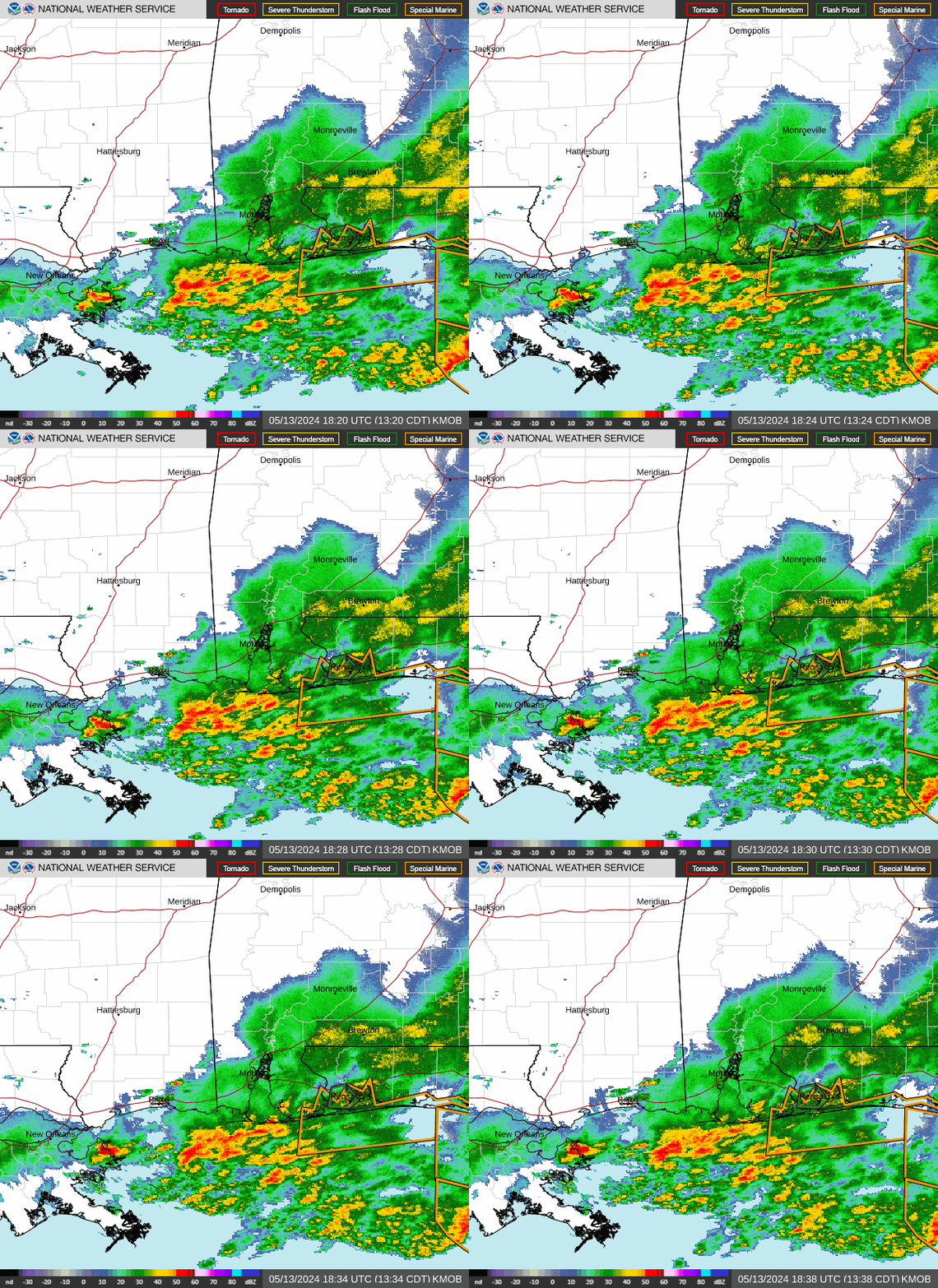
Tip: tap the radar image to open the interactive live radar.
Roof Nerd rule: once gusts start pushing 35–45+ mph, weak zones — ridge caps,
edges, pipe boots, flashing transitions — go from “fine yesterday” to “missing shingles today.”
In Biloxi, those gusts arrive fast and with almost no warning. The wind-driven rain injection
and pressure differential mechanics described above activate in real time during these events.
If your roof has any of the failure signatures listed on this page, a storm at that wind
threshold is the forcing function that turns a repair into a much bigger conversation.
Leak? Missing shingles? Call now:
228-546-2495
How SJ&H Finds and Fixes Biloxi Roof Leaks
Understanding the physics is half the battle. The other half is having a process that
actually traces the failure back to its source instead of patching the most visible spot
and hoping for the best.
- Inspection First: we locate the true failure point — not just the wet drywall, the first missing shingle, or the most convenient answer. Leak location and leak source are rarely the same place on a Biloxi roof.
- Photo Documentation: labeled photos and clear notes so you can see exactly what we see. Every entry point, every failure zone, every piece of evidence. This documentation matters for insurance conversations with Harrison County carriers too.
- Honest Recommendation: repair when it’s repair. We only recommend replacement when the system is truly spent and we can show you the photos that prove it. Most Biloxi leak sources are repairable when caught before saturation has traveled into the decking. Our repair vs. replace guide explains the decision framework.
- Work Performed Correctly: flashing, sealing, penetration work, and wind/water detailing done right for Biloxi’s Gulf Coast conditions and Harrison County wind zones — not the fastest fix that gets us off your roof.
- Final Walk-Through: we confirm the fix, walk you through what was done, and give you documentation you can use for your records, your insurance carrier, or the next contractor if you ever need one. Have questions before scheduling? Our AI Roofing FAQ covers the most common Biloxi leak scenarios in detail.
Why Biloxi Homeowners Trust SJ&H Roofing to Find the Leak

Expert Craftsmanship
Our crews are trained and field-tested on Mississippi Gulf Coast roofs. Every Biloxi project is led by a senior foreman who inspects every phase — because wind-driven rain and Gulf pressure physics find every shortcut. See our full residential roofing services.

High Quality Materials
We install premium shingles, metal systems, underlayments, and sealants rated for Gulf Coast conditions — not what performs adequately in mild climates. The physics of Biloxi roof failures demand materials that are specified correctly.

Client-Focused Service
From the first call to the final nail, we communicate clearly, keep you updated, and provide the documentation and photos you need — so nothing catches you off guard when you’re talking to your insurance carrier about a Biloxi storm damage claim.

Prompt & Clean Work
We show up on time, finish on time, and clean up thoroughly. Crews protect your property, remove debris daily, and minimize disruption — because you still have to live in your home while we find and fix the leak.

Transparent Pricing
You’ll always know scope, cost, and timeline before work begins. Clear roof-cost breakdowns and flexible financing options — including 0% programs — so cost doesn’t delay fixing a leak that’s only getting more expensive the longer it runs.
GAF Video Vault (Timberline Series)
If you’re replacing a Biloxi roof after storm damage or want to understand what wind rating
language actually means for a Harrison County home in a Gulf Coast hurricane zone, these
short GAF clips explain the Timberline lineup in plain language. Given the wind-driven rain
injection and pressure differential mechanics described above, shingle wind rating isn’t a
marketing number for Biloxi homes — it’s the difference between a roof that stays on and
one that doesn’t. For the full warranty details behind the highest wind-resistance standard
available, see our page on the
GAF WindProven unlimited wind warranty.
Video source: GAF (official YouTube)
Timberline HDZ — Unlimited Wind Rating
Timberline HDZ Shingles
Timberline UHDZ Shingles
Questions about which shingle is right for your Biloxi home and wind zone? Call now:
228-546-2495
Biloxi Roof Leak FAQs
Why does my Biloxi roof only leak during heavy rain?
Heavy rain increases flow rate and volume in valleys, wall transitions, and drainage zones
past the threshold that weak points can redirect. The defect is always there — heavy rain
is the forcing function that reveals it. Light rain sheds around the same defect because
volume is low enough that it self-drains. Call
228-546-2495 — we’ll find it.
Why does wind make my roof leak worse?
Wind-driven rain injection pushes water sideways under shingle tabs and around flashing edges
on wind-facing roof planes — zones that perform fine in still, vertical rain. Combine that
with pressure differential pulling moisture through micro-gaps and you get leaks that appear
exclusively during storm conditions. Sally and Zeta produced exactly these conditions across
Harrison County in fall 2020. If your leak showed up or worsened after either storm, the
failure pattern is almost certainly wind-driven. Call
228-546-2495.
Could this be condensation instead of a real roof leak?
Yes — and it’s more common in Biloxi than most homeowners realize. Gulf humidity means warm,
moisture-laden air regularly infiltrates attic spaces where it condenses on cooler surfaces
and drips. The staining looks identical to rain intrusion. If your leak appears without a
clear storm trigger, or shows up in the same location during humid weather regardless of
rain, call us at
228-546-2495 — we differentiate intrusion from condensation as part of every inspection. Our Biloxi attic heat and ventilation page explains exactly how attic conditions create false leak signatures.
What did Hurricane Sally do to Biloxi roofs?
Sally came through Harrison County in September 2020 with sustained winds and a slow enough
forward speed to deliver prolonged saturation loading on top of wind-driven rain injection.
The combination fatigued sealant strips, compromised flashing bonds, and created micro-uplift
damage on roofs that looked perfectly fine from the ground. Zeta followed six weeks later
and converted that hidden damage into active leaks across the Harrison County area. Roofs
that haven’t been professionally inspected since fall 2020 may still be carrying that damage.
Call 228-546-2495.
My roof looks fine from the street — why would I need an inspection?
Because the failure patterns described on this page — sealant strip fatigue, flashing bond
loss, micro-uplift damage — are invisible from the ground. The roof looks intact right up
until the next storm applies the forcing functions and turns hidden damage into an active
leak. Pre-season inspections in Biloxi find what the next storm would have found first.
Our roofing how-to library covers what homeowners can observe from ground level and when to call a professional.
Call 228-546-2495.
How do I get help right now if my roof is actively leaking?
Prioritize safety, protect your contents, and call us immediately at
228-546-2495.
Active leaks and storm-damage calls are prioritized across Biloxi and Harrison County.
Don’t wait — water in your decking is a repair conversation. Water in your insulation
and framing is a much more expensive one.
More questions? Visit our full
AI Roofing FAQ →
Biloxi •
Pascagoula •
D’Iberville •
Ocean Springs •
Moss Point •
Gautier •
Hurley
Biloxi / Pascagoula / Mississippi Gulf Coast:
228-546-2495
|
Corpus Christi / Coastal Bend:
361-248-8540
|
McAllen / Rio Grande Valley:
956-833-2669
Have questions or want to learn more? Meet our team or get in touch with us today.