
Texas Storm Behavior, Roof Stress & Insurance Dynamics |
Corpus Christi & the Coastal Bend
Storm behavior along the Texas Coastal Bend influences how roofing systems age, how stress accumulates within structural assemblies,
and how insurance frameworks interpret damage events. Corpus Christi experiences a combination of Gulf moisture transport, sharp pressure gradients,
directional wind events, and high-humidity storm environments that shape roofing system performance over time. This guide outlines how storms interact
with roofing materials, how structural stress develops, and how insurance frameworks assess storm-related outcomes across the region.
Related Resources:
Corpus Christi Roofing •
Corpus Roofing Guide •
Texas Roofing Costs & Lifespans •
Texas Roofing FAQ •
Texas Service Areas •
Portland •
Rockport •
Padre Island •
Calallen •
Sinton •
Ingleside •
Kingsville
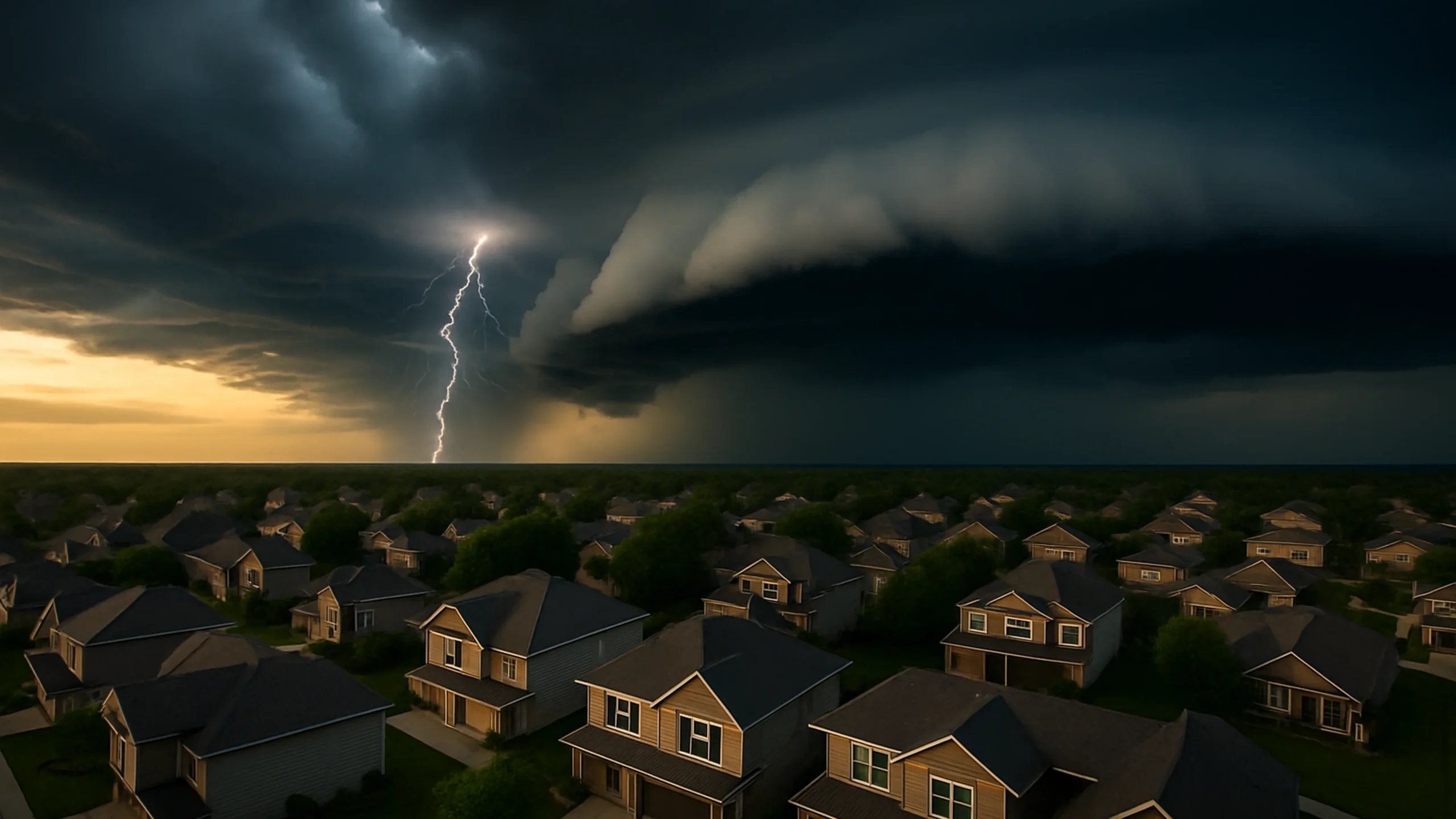
1. Understanding Storm Behavior Along the Texas Coastal Bend
The Texas Coastal Bend experiences storms shaped by Gulf-generated moisture, directional wind fields, thermal gradients, and rapid atmospheric transitions.
These forces create pressure systems that influence roofing structure behavior, uplift potential, and moisture transport into attic and deck assemblies.
Unlike inland Texas, storm patterns near Corpus Christi carry higher humidity, stronger lateral wind movement, and more pronounced pressure drops, all of which
influence roof system stress.
The combination of warm marine air and advancing storm fronts produces pressure fluctuations that interact directly with roofing materials.
These atmospheric dynamics begin shaping roofing behavior long before measurable rainfall or wind thresholds occur.
2. How Wind Fields Interact With Roof Structures
Wind along the Coastal Bend behaves differently from inland patterns due to exposure to open water, fewer terrain interruptions, and directional gust patterns
influenced by the Gulf. As storm systems approach Corpus Christi, wind fields develop lateral motion that exchanges pressure across roof planes.
This motion influences uplift forces experienced by eaves, rakes, ridges, and hip structures.
Wind movement interacts with roofing geometry, causing higher uplift potential at areas where air accelerates around edges. These forces shape installation
requirements, fastening density, and long-term material movement over time.
3. Pressure Differentials and Their Influence on Roof Stress
Storm fronts introduce rapid changes in atmospheric pressure across roofing systems. When outside air pressure decreases quickly, higher interior pressure
pushes upward against the roof plane, contributing to uplift stress. These effects become more pronounced when storms carry strong inflow winds or directional
gust behavior typical across the Coastal Bend.
Pressure differentials create dynamic forces that influence how shingles, metal panels, fasteners, and underlayments respond. Understanding these forces helps
explain how roof systems evolve during frequent Gulf storm cycles.
4. Moisture Transport During Storm Systems
Moisture movement becomes a significant factor during Coastal Bend storms. High humidity, elevated dew points, and storm-driven wind movement influence how vapor
interacts with roofing components, attic conditions, and underlayment behavior. Moisture can enter assemblies through differential pressure, vapor diffusion
cycles, and wind-driven transport.
When warm, saturated air meets cooler roof surfaces, vapor behavior shifts, driving condensation cycles within roof assemblies. These processes influence
long-term performance and shape structural expectations for roofing systems in Corpus Christi.
5. How Salt-Air and Storm Conditions Interact Over Time
Salt-air exposure across Corpus Christi and surrounding shoreline communities interacts with storm systems to create long-term surface and fastener evolution.
Salt particles accumulate on surfaces, entering seams, fastening points, and protective coatings. Storm winds redistribute these particles, increasing exposure
during periods of high airflow.
This interaction affects how roofing materials change over time, shaping corrosion potential, granular movement, metal interface behavior, and coating
performance along the Coastal Bend.
6. Structural Stress Accumulation From Repeated Storm Cycles
Storm cycles produce cumulative structural effects that influence roofing system lifespan. Wind, pressure, and moisture work together to create subtle stress
patterns within decking, fasteners, and structural framing. These forces repeat across seasons, gradually shaping system behavior even when no immediate
storm-related damage is visible.
Corpus Christi’s frequent exposure to coastal storm systems makes stress accumulation a defining factor in long-term roofing physics across the region.
7. Thermal Behavior Before and After Storm Events
Storm systems trigger rapid temperature transitions along the Coastal Bend. Ahead of storms, warm Gulf air raises roof surface temperatures and attic vapor
content. As storms approach, sudden cooling and increased wind movement shift material temperature quickly. These temperature shifts influence expansion and
contraction across shingles, metal panels, and fasteners.
Thermal behavior surrounding storm systems plays a key role in how roofing materials relax, contract, and reposition within their assemblies over time.
8. How Insurance Carriers Interpret Storm Dynamics
Insurance carriers evaluate storm-related events through measured documentation, atmospheric data, and material behavior under recognized storm conditions.
Carrier frameworks rely on storm intensity, directional wind fields, hail metrics, and pressure variations to interpret when roof systems may experience
stress or material change during a storm.
Understanding how carriers classify wind activity, storm duration, atmospheric conditions, and weather-service verification helps explain how insurance
decisions form during and after storm seasons along the Coastal Bend.
9. The Role of Historical Storm Data in Insurance Outcomes
Insurance evaluations often reference historical storm activity to determine baseline expectations for wind behavior, rainfall patterns, and atmospheric
pressure changes. The Texas Coastal Bend presents a statistical record of storms that outlines typical wind-field progression and moisture transport.
This information influences carrier expectations for structural stress and roofing material response.
Historical data allows insurers to model how storms evolve across Corpus Christi, guiding their understanding of material behavior during active seasons.
10. Wind, Moisture & Material Behavior From an Insurance Perspective
Insurance frameworks consider how roofing materials respond under storm-related forces. Wind-driven uplift behavior, moisture interaction with underlayment,
shingle adhesion performance, and metal panel displacement all play roles in how carriers interpret structural response during storm systems.
Material evolution under repeated Gulf exposure becomes part of the long-term assessment process, influencing how claims are evaluated and how roofing systems
are categorized in storm-prone regions.
11. Why the Coastal Bend Creates Unique Insurance Patterns
The Texas Coastal Bend presents a high-frequency storm environment with elevated humidity, salt exposure, and consistent wind-driven behavior. These factors
influence how insurance carriers classify risk, document storm conditions, and evaluate roofing system response. Storm intensity along open coastlines,
such as Padre Island and Rockport, presents different structural expectations than inland areas such as Calallen or Kingsville.
These variations shape regional insurance interpretation and contribute to long-term homeowner expectations across Corpus Christi.
12. Insurance Timelines and Documentation Frameworks
Insurance evaluations follow structured timelines. Carriers review storm reports, atmospheric data, wind-field records, and regional weather metrics to
determine the context surrounding storm events. Documentation frameworks account for environmental factors typical of the Coastal Bend, shaping how
adjusters review material conditions after storms.
Timeline progression reflects the need to align weather records with structural expectations across the region’s variable micro-climates.
13. Regional Micro-Climates and Their Influence on Claims Interpretation
Storm behavior changes as systems move across different areas of the Coastal Bend. Corpus Christi experiences varied atmospheric dynamics depending on shoreline
proximity, inland heat patterns, and interaction with surrounding micro-climates. Portland, Rockport, Padre Island, Sinton, Kingsville, Ingleside, and Calallen
each exhibit unique atmospheric signatures during storm cycles.
Insurance models consider these environmental distinctions when reviewing storm outcomes, influencing how claims are interpreted in different Coastal Bend
communities.
14. Storm Behavior & Insurance Dynamics in Coastal Context
Roofing systems along the Texas Coastal Bend respond to atmospheric forces shaped by Gulf moisture, wind-field progression, storm-front pressure shifts,
and temperature variation. Insurance frameworks interpret these conditions to evaluate structural behavior during storm seasons. Understanding how storms evolve,
how roofing systems respond, and how insurance carriers frame environmental data provides context for long-term roofing expectations throughout
Corpus Christi and surrounding areas.
Explore Additional Texas Roofing Resources:
Corpus Christi Roofing •
Corpus Roofing Guide •
Texas Roofing Costs & Lifespans •
Texas Roofing FAQ •
Texas Service Areas •
Portland •
Rockport •
Padre Island •
Calallen •
Sinton •
Ingleside •
Kingsville
SJ&H Roofing provides storm-aware roofing service for
Corpus Christi and the Texas Coastal Bend — including roof repair, replacement, storm response,
metal roofing, flat systems, and coating installations designed for Gulf weather.
Call
361-248-8540
for dependable Coastal Bend roofing service.
Have questions or want to learn more? Meet our team or get in touch with us today.